
Top 10 Largest Orogenic Gold Deposits in the World: Tectonics, Structure, and Genesis
Introduction: Why Orogenic Gold Dominates Global Production
The largest orogenic gold deposits in the world represent the premier source of primary gold in the Earth's...

Top 10 Free Satellite Imagery Sources for Geological Mapping (2026)
Obtaining high-quality remote sensing data is the crucial first step for any mineral exploration project. When searching for free satellite imagery for geological mapping,...
Top 10 QGIS Plugins for Geology & Mineral Exploration (2026)
Top 10 Essential QGIS Plugins for Mineral Exploration Geologists
1.Semi-Automatic Classification Plugin (SCP)
Crucial for downloading and processing Sentinel-2, Landsat, and ASTER imagery directly within the...
Geochemical Anomaly: The Critical Role of Geological Mapping in Stream Sediment and Soil Exploration
Identifying a geochemical anomaly is the fundamental goal of mineral exploration, a complex, multidisciplinary science heavily reliant on detecting the "unseen." At the heart...
Advanced Mineral Exploration: Mapping Hydrothermal Alteration Zones Using Multispectral Drone Imagery
Introduction: The Shift from Satellite to Drone-Based Exploration
The use of multispectral drone imagery has completely revolutionized advanced mineral exploration and alteration mapping.For decades, resource...
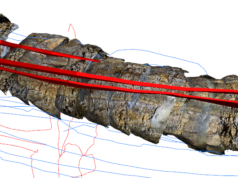
LiDAR-Based 3D Ore Vein Modeling in Underground Mining
Introduction: The Evolution of Underground Face Mapping
Traditionally, underground face mapping has been a time-consuming process, relying on manual sketches and tape measures. However, integrating...
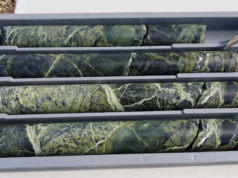
Why Do Serpentinites Produce Magnetic Anomalies?
In exploration geology and airborne magnetic surveys, some of the most distinct and intense positive anomalies are generated by ultramafic rocks, specifically serpentinites. The...
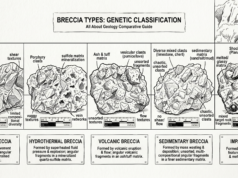
What is Breccia? The Rock of Catastrophes
In geology, breccia is not just a single rock type; it is the textural signature of a violent, high-energy event. Unlike a conglomerate, where...
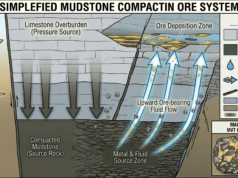
The Colossal Subsurface Press: Mudstone Compaction and Billion-Ton SEDEX / MVT Deposits
Thick mudstone and shale sequences seen on geological maps or in core boxes are often dismissed as "uneconomic, boring cover rocks." However, for exploration...
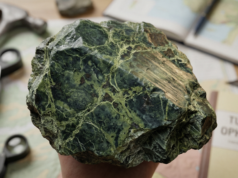
Mineralization in Serpentinites: Mechanisms and Structural Controls
Mineralization in serpentinites is directly linked to the serpentinization process itself—the hydrothermal alteration of ultramafic rocks such as peridotite and dunite—as well as the...
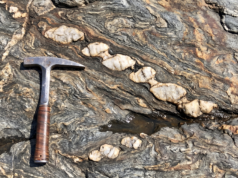
What Textures Tell Us? Part 4: The Fingerprints of Tectonic Stress (Structural Textures)
In the first three parts of our series, we explored the textures left behind by boiling hydrothermal fluids and magmatic heat. But there is...
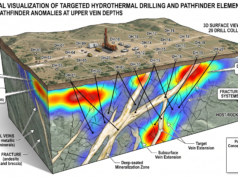
The Invisible Halos: Decoding Geochemical Vectors | Part 1: The Smoke Before the Fire...
In Part 1, we start with the most crucial concept in exploration geochemistry: Pathfinder Elements.
In our "What Textures Tell Us?" series, we focused on...
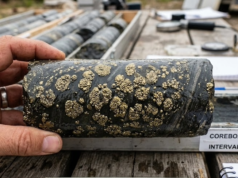
What Textures Tell Us? Part 3: Submarine Furnaces and Sulfide Textures (VMS & SEDEX)
When magma-heated, metal-laden fluids erupt from seafloor fissures and collide with cold 2°C seawater, a massive chemical reaction begins. In these submarine furnaces (Volcanogenic...
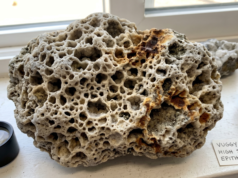
What Textures Tell Us? Part 1: Decoding Magmatic-Hydrothermal Alteration
Before we look at the 34-element assay data or build complex grade distribution models, we must read the rocks. Every ore deposit is essentially...
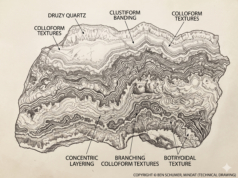
What Textures Tell Us? Part 2: Decoding Hydrothermal & Epithermal Veins
The journey of hydrothermal fluids is a violent and dynamic one. When deep-seated, mineral-rich fluids ascend through crustal fracture networks, they don't simply cool...
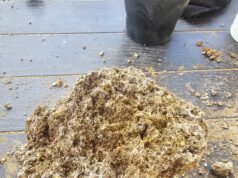
SEDEX vs. MVT DEPOSITS
1. SEDEX (Sedimentary Exhalative): "The Seafloor Volcano"
SEDEX deposits are Syngenetic. This means the ore forms at the exact same time as the rock that...
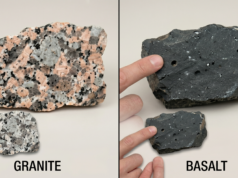
Phaneritic vs. Aphanitic Textures: How to Read Igneous Rocks Like a Pro
If you want to understand the history of an igneous rock, you don't need a complex laboratory. You just need to look at its...
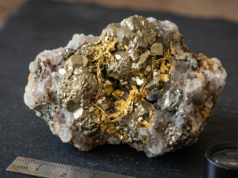
Gold-Bearing vs. Barren Pyrite: The Truth About Fool’s Gold
Every beginner in geology quickly learns about Pyrite (FeS₂). With its brassy-yellow color and metallic luster, it has tricked prospectors for centuries, earning it...
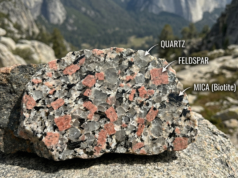
Granite Rock Formation: Is It Intrusive or Extrusive?
When you look at a polished granite countertop or a massive mountain peak like El Capitan in Yosemite, you are looking at one of...
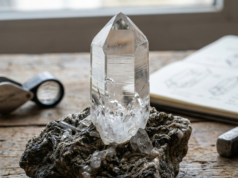
How to Identify Quartz in the Field: A Step-by-Step Guide
Quartz is the most abundant and widely distributed mineral found at Earth's surface. It is present and plentiful in all parts of the world,...
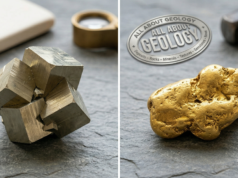
Gold vs. Pyrite: A Field Guide to Identifying “Fool’s Gold”
Every geologist, prospector, and rock hound has experienced that sudden rush of adrenaline when a glint of yellow catches their eye in a rock...