When mineral exploration companies are hunting for high-grade, “bonanza” precious metal veins, they are usually targeting the top of a hydrothermal system: the Epithermal Zone.
Derived from the Greek words epi (shallow) and thermal (heat), epithermal deposits form at shallow depths in the Earth’s crust, typically from the surface down to about 1.5 kilometers. Driven by boiling fluids at relatively low temperatures (50°C to 200°C), these environments are globally recognized as the premier source of high-grade Gold (Au) and Silver (Ag).
However, not all epithermal systems are the same. Based on the chemistry of the fluids and their proximity to the deep magmatic heat source, geologists divide these systems into two major end-members: High-Sulfidation (HS) and Low-Sulfidation (LS). Understanding the difference is the absolute key to vectoring toward the ore.
1. High-Sulfidation (HS) Epithermal Systems

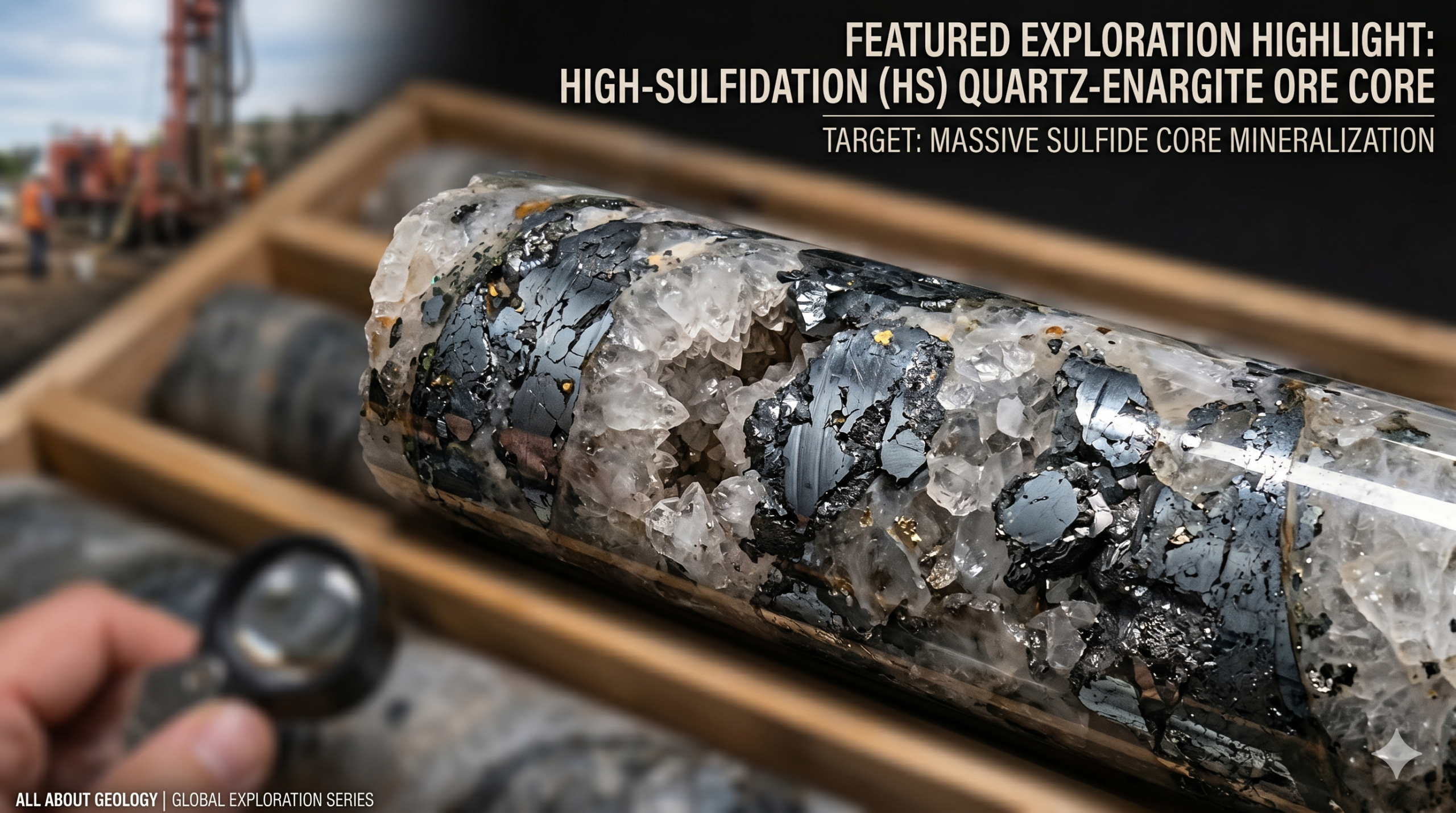
High-sulfidation systems form close to the volcanic center, directly above the deep magmatic intrusion. The fluids here are heavily dominated by magmatic gases (like sulfur dioxide and hydrogen chloride).
- Fluid Chemistry: Highly acidic (very low pH) and highly oxidized. These fluids act like hot acid, violently attacking the surrounding host rock.
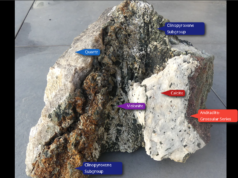
- Alteration Signature: The extreme acidity leaches away almost everything except silica, leaving behind a highly porous, sponge-like rock known as vuggy silica. Surrounding this core is usually a halo of advanced argillic alteration (minerals like alunite, pyrophyllite, and kaolinite).
- Mineralization: Gold is typically associated with copper-rich sulfides like enargite and luzonite, alongside pyrite.
- The Target: HS deposits are often massive, disseminated ore bodies mined via large open pits.
2. Low-Sulfidation (LS) Epithermal Systems

Low-sulfidation systems form further away from the volcanic center. Here, the rising magmatic fluids have time to mix extensively with cold, descending meteoric water (groundwater).
- Fluid Chemistry: Near-neutral pH and chemically reduced. Because the fluid is neutralized, it does not aggressively eat away the host rock like an HS system.
- Alteration Signature: Characterized by adularia and sericite alteration halos.
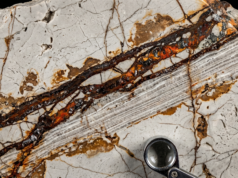
- Mineralization: This is the realm of the classic, visually stunning banded quartz veins. Repeated cycles of fluid boiling and mineral precipitation create distinct layers of quartz, chalcedony, and precious metals.
- The Target: LS systems typically form high-grade, narrow-vein targets (often mined underground). Electrum (a natural gold-silver alloy), native gold, and silver sulfosalts are the primary economic drivers.
Exploration Strategies: Vectoring Toward the High Grade
Finding the alteration halo on the surface is only the first step. To pinpoint the economic core of an epithermal system and plan a drilling program, modern exploration geologists rely on integrated data sets:
- 3D Structural Modeling: Because epithermal veins are highly structurally controlled, mapping fault kinematics and building precise 3D block models of the vein clusters is critical for calculating tonnage.
- Multi-Element Geochemistry: Precious metals rarely travel alone. Running comprehensive analyses (such as 34-element ICP packages) allows geologists to track pathfinder elements. Elevated Arsenic (As), Antimony (Sb), and Mercury (Hg) usually indicate the shallow tops of the system.
- Base Metal Transitions: As you drill deeper, approaching the mesothermal transition zone, you must pay close attention to base metal cut-off grades. An increasing presence of deep zinc (sphalerite) or copper can signal that you are passing the bottom of the epithermal precious metal boiling zone.
Conclusion
Whether you are logging vuggy silica in a high-sulfidation lithocap or mapping banded quartz-adularia veins in a low-sulfidation fault zone, the rule remains the same: understand the fluid, recognize the alteration, and follow the structures.
(For a broader understanding of how these shallow systems connect to the deeper mesothermal and hypothermal environments, check out our Complete Guide to Hydrothermal Ore Deposits).


[…] Epithermal Gold-Silver Deposits […]
[…] Epithermal Gold-Silver Deposits […]
[…] Epithermal Gold-Silver Deposits […]
[…] Epithermal Gold-Silver Deposits […]