
Mineral Deposits: The Ultimate Guide to Ore Formation and Exploration
Introduction Every technological advancement, from the copper wire in your walls to the lithium in your smartphone, begins deep within the Earth. But valuable minerals are not scattered evenly across the globe. They are concentrated in specific geological environments known as mineral deposits (or ore deposits).
Understanding how these deposits form, where to find them, and how to evaluate them is the core of economic geology. Whether you are a student learning about hydrothermal fluids or a professional evaluating drill core data, this guide covers the fundamental processes of ore formation and modern exploration techniques.
What Makes a Mineral Deposit an “Ore”?
It is crucial to understand the difference between a simple mineral deposit and an “ore deposit.” A mineral deposit is any geological concentration of a specific mineral. However, it only becomes an ore deposit if the mineral can be extracted and processed at an economic profit. This depends on several dynamic factors:
- Grade: The concentration of the valuable element (e.g., grams of gold per tonne of rock).
- Tonnage: The total size and volume of the deposit.
- Commodity Prices: The current market value of the metal.
- Processing Costs: How difficult it is to separate the valuable mineral from the waste rock (gangue).
Major Types of Mineral Deposits
Nature has several mechanisms for concentrating elements. Geologists classify these deposits based on their genetic formation processes:
1. Magmatic Deposits
These form directly from the cooling and crystallization of magma deep underground. As magma cools, heavy, economically valuable minerals can sink to the bottom of the magma chamber (fractional crystallization) or separate into distinct liquid layers.
- Examples: Platinum Group Elements (PGEs), Chromite deposits, and massive Nickel-Copper sulfide deposits.
Hydrothermal Deposits (The Most Common)

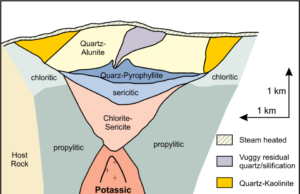
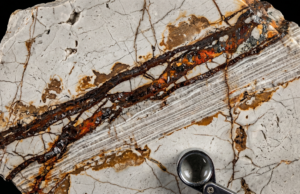
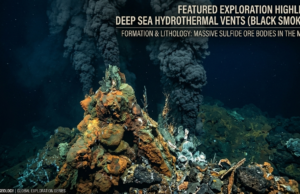
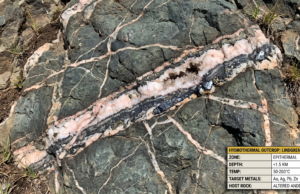
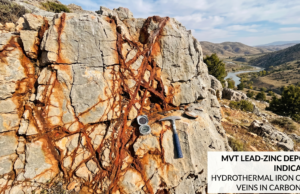
Hot, mineral-rich aqueous fluids circulate through cracks and faults in the Earth’s crust. As these fluids cool, lose pressure, or react with different host rocks, they precipitate dissolved metals, creating massive veins or disseminated zones of ore.
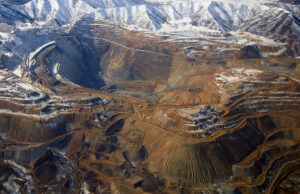
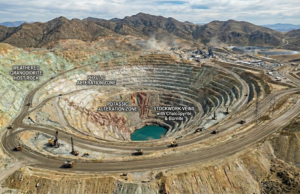
- Porphyry Deposits: Massive, low-grade deposits usually containing copper, molybdenum, and gold.
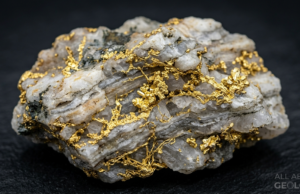
- Epithermal Veins: Shallower systems famous for high-grade gold and silver quartz veins.
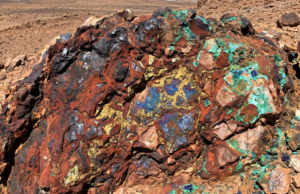
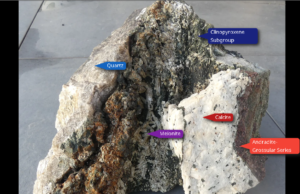
- Skarns: Formed when hot magmatic fluids react with carbonate rocks (like limestone), creating distinct, colorful alteration zones rich in copper, tungsten, or zinc.
3. Sedimentary and Placer Deposits

Surface processes like weathering, erosion, and water transport can also concentrate heavy minerals. Placer deposits form when dense minerals (like native gold or diamonds) are washed into rivers and accumulate in stream beds where the water current slows down.
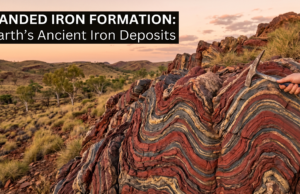
- Examples: Witwatersrand gold in South Africa, Banded Iron Formations (BIFs).
Modern Exploration & Resource Estimation
The days of prospectors simply looking for shiny rocks on the surface are largely behind us. Modern mineral exploration is a high-tech science that relies on reading subtle clues left behind by the ore-forming processes.
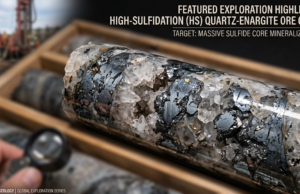
Multi-Element Geochemistry Economic geologists don’t just look for the target metal. By utilizing comprehensive multi-element geochemical analysis (often 30+ elements), geologists can track “pathfinder elements” and map out alteration halos. This data is critical for correlating subsurface ore veins even when the main ore body isn’t immediately visible.
3D Geological Modeling Once drilling begins, the massive amounts of structural, lithological, and assay data must be visualized. Modern geologists rely on advanced 3D modeling software to interpret drill hole data, correlate vein structures across long distances, and build robust block models. These digital block models form the foundation of accurate resource estimation, allowing mining engineers to design the most efficient extraction methods.