
Volcanic and Igneous Rocks: The Ultimate Guide to Earth’s Magmatic Systems
The Genesis of Rock: Born from Fire
Every rock on Earth, at some point in its deep history, was born from fire. Igneous rocks (from the Latin ignis, meaning fire) are the primary materials of our planet’s crust. They form through the fundamental process of crystallization—the cooling and solidification of molten rock. When this molten material is trapped beneath the surface, it is called magma. When it breaches the surface through volcanic vents or fissures, it is called lava.
Understanding these rocks requires a deep dive into the environments where they cool, the speed at which they crystallize, and the complex chemistry of the mantle and crust.
The Great Divide: Intrusive vs. Extrusive Environments
The most critical classification of igneous rocks depends entirely on where the molten rock solidifies. This location dictates the cooling rate, which in turn permanently locks in the rock’s physical texture.
Intrusive (Plutonic) Rocks: The Deep Crustal Forges
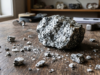
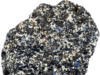
Intrusive rocks form when magma stalls and pools in large chambers deep within the Earth’s crust. Surrounded by kilometers of solid, insulating country rock, this magma is subjected to an incredibly slow cooling process that can last hundreds of thousands to millions of years.
The Result: This immense time allowance permits individual chemical elements to migrate and bond, growing into large, perfectly structured mineral crystals that are easily visible to the naked eye.
Examples: Granite, Diorite, Gabbro, and Peridotite.
Extrusive (Volcanic) Rocks: The Violent Surface Eruptions
Extrusive rocks are the dramatic counterpart. They form when magma is forcefully expelled onto the Earth’s surface as lava flows or blasted into the atmosphere as fragmented ash. Exposed to the freezing ocean depths or the cool atmosphere, the temperature of the lava drops catastrophically.
The Result: The cooling is so rapid—often occurring in days or hours—that minerals simply do not have the time to organize into large crystals. The resulting rock is typically fine-grained or even completely glassy.
Examples: Basalt, Andesite, Rhyolite, Pumice, and Obsidian.
Cooling Rates and Igneous Textures

For a field geologist, the texture of an igneous rock is a detailed logbook of its cooling history. The primary textures include:
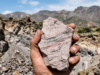
Phaneritic (Coarse-Grained): Characteristic of intrusive rocks. Crystals are large and interlocking (e.g., Granite).
Aphanitic (Fine-Grained): Characteristic of extrusive rocks. Crystals are microscopic, requiring a hand lens or microscope to identify (e.g., Basalt).
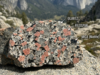
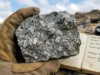
Porphyritic (The Mixed History): A fascinating texture where large crystals (phenocrysts) are embedded within a fine-grained matrix (groundmass). This indicates a two-stage cooling process: magma began cooling slowly deep underground, forming the large crystals, before suddenly erupting to the surface where the remaining liquid flash-cooled around them.
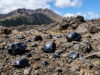
Glassy: Formed by instantaneous quenching, usually when lava enters water. Atomic structures freeze before any crystal lattice can form (e.g., Obsidian).
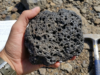
Vesicular: As magma depressurizes near the surface, dissolved volatiles (water, $CO_2$) expand into gas bubbles. If the rock solidifies quickly, these bubbles are trapped as spherical voids called vesicles (e.g., Scoria, Pumice).
The Silica Spectrum: Classifying by Composition

Beyond texture, magmatic rocks are classified by their chemical composition, specifically their percentage of Silica ($SiO_2$). This chemistry dictates the rock’s color, the minerals it contains, and the explosivity of the volcano it erupts from.
Felsic (High Silica, >65%): Light-colored rocks rich in quartz and feldspar. Felsic magma is highly viscous (thick) and traps gases, leading to violently explosive eruptions. (Intrusive: Granite | Extrusive: Rhyolite)
Intermediate (Medium Silica, 55-65%): Mid-tone grayish rocks containing amphibole and plagioclase. Commonly associated with subduction zone stratovolcanoes. (Intrusive: Diorite | Extrusive: Andesite)
Mafic (Low Silica, 45-55%): Dark-colored, dense rocks rich in iron and magnesium. Mafic lava is highly fluid, forming massive shield volcanoes and oceanic crust. (Intrusive: Gabbro | Extrusive: Basalt)
Ultramafic (Very Low Silica, <45%): Extremely dense, dark green to black rocks originating directly from the Earth’s mantle, composed almost entirely of olivine and pyroxene. (Intrusive: Peridotite | Extrusive: Komatiite – rare on modern Earth).
Geological and Economic Importance
Volcanic and igneous rocks are more than just the architectural foundation of our continents and ocean basins. They are the driving engines of the Earth’s most critical economic resources.
The immense heat radiating from deep magmatic intrusions acts as an engine, driving the aggressive circulation of hydrothermal fluids through fractures in the crust. These superheated fluids scavenge, transport, and eventually precipitate massive quantities of metals. This magmatic-hydrothermal connection is directly responsible for the formation of world-class Volcanogenic Massive Sulfide (VMS) deposits, porphyry copper systems, and rich epithermal gold and silver veins. Without these magmatic heat engines, the modern industrial world would not have the mineral resources it relies upon.