
The Sulfide Minerals: The Economic Engine of Base Metal Exploration
In the study of economic geology, no mineral group is more critical than the sulfides. Formed when metallic elements bond with sulfur (S), these opaque, dense, and often metallic-looking minerals represent the primary global source of base metals like copper, lead, zinc, and nickel.
Unlike oxides, which often form in the weathered, oxygen-rich near-surface environment, primary sulfide minerals precipitate from hot hydrothermal fluids deep within the Earth’s crust, or directly from crystallizing sulfide melts. For the exploration and resource geologist, identifying, logging, and modeling these minerals is the fundamental basis of mine development.
Here is your essential exploration guide to the most significant sulfide minerals.
1. Chalcopyrite: The Copper Workhorse

Chalcopyrite (CuFeS2) is the most abundant copper-bearing mineral on Earth and the primary target for most copper exploration programs.
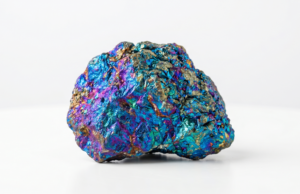
- Field Recognition: It has a distinct brassy-yellow color, often tarnishing to iridescent blues and purples. It is noticeably softer than pyrite (Mohs hardness of 3.5 to 4) and can be scratched easily with a steel nail.
- Exploration Significance: Chalcopyrite is the cornerstone of porphyry copper deposits and massive sulfide systems. When developing shallow, structurally-controlled copper sulfide projects—such as those located in the tectonically active, mineralized belts of Balochistan, Pakistan—identifying the fault networks and shear zones that host primary chalcopyrite mineralization is the primary objective. As these shallow systems weather, the chalcopyrite oxidizes to form brilliant green malachite at the surface, providing a direct vector to the sulfide ore below.
2. Pyrite: The Ubiquitous Indicator

Pyrite (FeS2), famously known as “Fool’s Gold,” is the most widespread sulfide mineral.
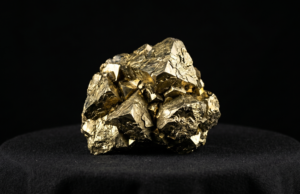
- Field Recognition: Pyrite forms distinct cubic or pyritohedral crystals with a pale brass-yellow color. It is hard (Mohs 6-6.5) and strikes sparks when hit with a steel hammer, distinguishing it completely from native gold.
- Exploration Significance: While rarely mined for iron, pyrite is crucial. It is the dominant sulfide in the phyllic and propylitic alteration halos surrounding porphyry systems. Furthermore, pyrite is a classic host for refractory gold; the gold is locked microscopically within the pyrite crystal lattice, requiring specialized metallurgical roasting or pressure oxidation to extract. Environmentally, the oxidation of exposed pyrite is the primary cause of Acid Mine Drainage (AMD).
3. Galena and Sphalerite: The Pb-Zn Duo

These two minerals are inextricably linked, forming the foundation of the world’s lead and zinc supply. They frequently precipitate together in Volcanogenic Massive Sulfide (VMS) and Sedimentary Exhalative (SEDEX) deposits.
- Galena (PbS): Extremely heavy (SG 7.5) with a bright metallic luster and perfect cubic cleavage. It is the primary ore of lead and a major source of silver (argentiferous galena).
- Sphalerite (ZnS): The primary ore of zinc. Unlike most sulfides, it is not always metallic. It has a resinous luster and its color ranges from pale yellow to almost black depending on its iron content. Geologists often use the “streak test” on sphalerite; no matter how dark the crystal, it typically leaves a pale yellow-brown streak.
4. Bornite: The Peacock Ore

Bornite (Cu5FeS4) is a highly valuable, high-grade copper sulfide.
- Field Recognition: On fresh surfaces, it is a bronze-brown color, but it rapidly tarnishes upon exposure to air to spectacular, iridescent purples, blues, and reds, earning it the nickname “peacock ore.”
- Exploration Significance: Finding bornite in the core shed is cause for celebration. Because it contains significantly more copper by weight (~63%) compared to chalcopyrite (~34%), zones of massive bornite drastically increase the average grade of a deposit.