
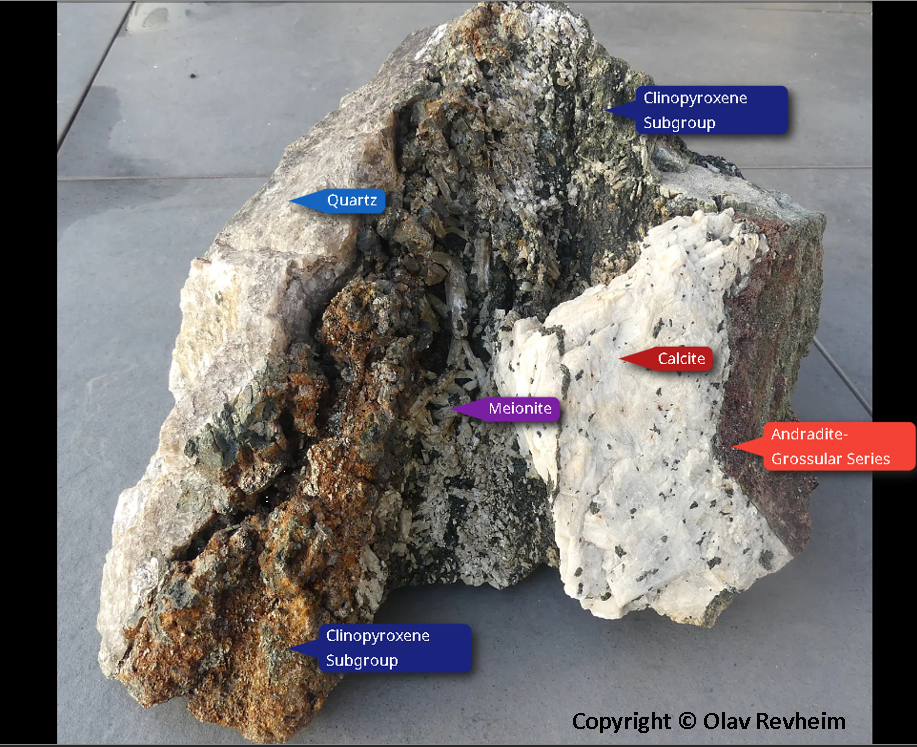
Introduction: The Masterclasses of Magmatic-Hydrothermal Metasomatism

Skarns are often viewed simply as “cooked limestones” at the contact zone. This part explores the sophisticated fluid dynamics and the often-ignored importance of the intrusion itself.
Among the diverse spectrum of magmatic-hydrothermal ore systems, skarn deposits stand out as some of the most mineralogically complex and visually striking mineral deposits in the Earth’s crust.
Formed where hot, chemically reactive magmatic-hydrothermal fluids encounter reactive host rocks—predominantly carbonate lithologies such as limestones and dolomites—skarn deposits are premier global sources of copper, gold, iron, tungsten, tin, zinc, lead, and molybdenum.
World-class operations such as Antamina (Peru), Grasberg Skarn (Indonesia), Ok Tedi (Papua New Guinea), and Bingham Canyon distal skarns (Utah, USA) showcase the extraordinary economic grade and tonnage that skarn deposits can achieve.
Traditionally dismissed as simple “contact metamorphic aureoles,” modern economic geology classifies skarn deposits as dynamic, multi-stage reaction fronts. Developing an exploration model for skarn deposits requires understanding thermodynamic fluid evolution, chemical zonation from endoskarn to exoskarn, and the critical distinction between prograde skarn minerals and retrograde sulfide mineralization.
1.The Three Evolutionary Stages of Skarn Formation
A fundamental truth recognized by economic geologists is that skarn deposits do not form in a single event. Rather, economic skarn deposits evolve through three sequential, time-transgressive stages governed by changing temperature, pressure, and fluid chemistry:
[Stage 1: Isochemical Metamorphism] ---> [Stage 2: Prograde Metasomatism] ---> [Stage 3: Retrograde Ore Precipitation]
- High T, No External Fluid             - Magmatic Brines (400°-800°C)         - Hydrous Meteoric Influx (250°-450°C)
- Hornfels & Recrystallized Marble      - Anhydrous Garnet & Pyroxene          - Epidote, Chlorite, Sulfides, Gold
- Reaction-Enhanced Permeability        - Metal-Poor / Barren Silicates        - Economic Grade Deposition
Stage 1: Isochemical Contact Metamorphism
Before large-scale fluid transfer begins, conductive heat radiating from the cooling pluton bakes the surrounding sedimentary rocks without significant mass transfer (except for the release of H2O and CO2).
- Pure Carbonates: Recrystallize into coarse-grained calcite or dolomite marble, creating the distal “marble front.”
- Siliceous/Argillaceous Carbonates: Convert into fine-grained, dense calc-silicate rocks known as hornfels or skarnoids.
- Reaction-Enhanced Permeability: Decarbonation reactions release volatile CO2, causing volume reduction and generating micro-fracture networks (crackle brecciation) that prepare the host rocks to receive incoming hydrothermal fluids.
Stage 2: Prograde Metasomatism (The Barren Silicate Framework)
As the magma crystallizes and exsolves high-temperature (400°C to > 800°C), hyper-saline magmatic brines, these fluids infiltrate the fractured carbonate wall rocks.
- Fluid-rock interaction drives large-scale metasomatic exchange: calcium is leached from the limestone while silica, iron, and aluminum are introduced by the fluid.
- Mineralogy: Dominated by anhydrous, high-temperature calc-silicates:
- Garnets: Solid solutions between grossular (Ca-Al) and andradite (Ca-Fe).
- Pyroxenes: Solid solutions between diopside (Ca-Mg) and hedenbergite (Ca-Fe).
- Wollastonite: Forms at the outermost reaction front in pure calcite limestone.
- Economic Reality: Despite forming spectacular, giant crystal clusters, the prograde stage in most skarn deposits is essentially barren of economic sulfides and precious metals.
Stage 3: Retrograde Hydrous Alteration and Ore Deposition (The Economic Event)
As the magmatic system wanes and cools below 450°C to 250°C, external meteoric groundwater collapses inward into the hydrothermal cell. This hydrous cooling event overprints and alters the earlier anhydrous silicates.
- Hydrous Mineralogy: Garnets and pyroxenes are hydrothermally destroyed and replaced by epidote, chlorite, actinolite-tremolite, calcite, and quartz.
- Sulfide Precipitation: Destabilization of metal-chloride complexes precipitates economic minerals: chalcopyrite, bornite, gold, sphalerite, galena, molybdenite, and magnetite.
- Exploration Implication: A project showing only fresh, unaltered, glass-like garnets represents a barren prograde system. Extensive retrograde destruction of garnets to hydrous silicates is the primary vector for economic ore shells in skarn deposits.
Endoskarn vs. Exoskarn: Zonation and Emplacement Vectors

As near-surface deposits are exhausted, exploration is moving to “Distal Skarns” and “Mantos”. This part focuses on finding the blind ore and the digital modeling struggle.
Every skarn system displays an internal architectural dichotomy based on whether metasomatism occurred within the intrusion or within the sedimentary host:
Endoskarn (Within the Pluton)
Metasomatic alteration affecting the margin of the intrusive igneous rock itself.
- Hot, calcium-rich fluids derived from limestone dissolution back-react with the intrusion.
- Igneous plagioclase and potassium feldspar are replaced by pyroxene, epidote, scapolite, and garnet.
- Vectoring Significance: The ratio of endoskarn to exoskarn volume indicates the structural depth of emplacement. Extensive endoskarn development signifies a deep, high-pressure, long-lived hydrothermal system typical of giant copper-gold skarn deposits.
Exoskarn (Within the Carbonate Host)
Metasomatic replacement of the sedimentary wall rock outboard of the intrusive contact.
- Proximal Exoskarn: Dominated by dark andradite garnets, magnetite, and copper sulfides.
- Distal Exoskarn: Transitions outward into pale green hedenbergitic pyroxene, zinc-lead sulfides, and finally the bleached marble front.
3. Calcic vs. Magnesian Skarns: The Protolith Control
The chemical composition of the host rock dictates the mineralogical assemblage and physical properties of skarn deposits:
| Diagnostic Feature | Calcic Skarn | Magnesian Skarn |
| Host Rock Protolith | Pure to impure Limestone (CaCO3) | Dolomite / Dolomitic Limestone (CaMg(CO3)2) |
| Prograde Minerals | Andradite-grossular garnet, hedenbergite pyroxene, wollastonite | Forsterite, diopside, humite group, spinel |
| Retrograde Minerals | Epidote, actinolite, chlorite, calcite, quartz | Serpentine, talc, phlogopite, tremolite, brucite |
| Associated Ore Metals | Copper, Gold, Zinc, Lead, Tungsten | Magnetite (Iron), Copper, Tin, Gold |
| Key Field Marker | Massive garnet-pyroxene bands | Massive magnetite bodies and serpentinized dolomite |
4. Pluton Oxidation State and Metal Selectivity
The oxidation state (fO2) of the causative intrusion serves as a master control determining which metals accumulate in skarn deposits:
Oxidized Systems (Magnetite-Series Plutons)
- Associated with subduction-related calc-alkaline to alkaline porphyry complexes.
- High oxygen fugacity stabilizes ferric iron (Fe3+), forming dark brown andradite garnets and magnetite.
- Economic Metals: Highly favorable for Copper, Gold, and Iron skarns (e.g., Grasberg, Antamina).
Reduced Systems (Ilmenite-Series Plutons)
- Associated with post-collisional crustal melts and S-type granites.
- Low oxygen fugacity stabilizes ferrous iron (Fe2+), producing pale green grossular garnets and hedenbergitic pyroxene.
- Economic Metals: Highly favorable for Tungsten (scheelite), Tin (cassiterite), and Reduced-Gold skarns (e.g., Fort Knox district, Cantung).
5. Distal Transitions: The Manto and CRD Horizon
As metasomatic fluids migrate away from the pluton along permeable bedding planes and fault conduits, high-temperature silicate skarn deposits gradually lose their anhydrous minerals and transition into:
- Carbonate Replacement Deposits (CRD): Massive sulfide bodies replacing limestone without silicate minerals.
- Mantos and Chimneys: Flat-lying (manto) and vertical pipe-like (chimney) bodies rich in silver, lead, and zinc.
- Manganiferous Halos: The outermost distal vector is marked by manganese-rich carbonates (rhodochrosite) and pyroxenes, extending kilometers into regional limestone stratigraphy.
6. 3D Geological Modeling and Resource Challenges
When building resource block models for skarn deposits in implicit modeling packages such as Leapfrog Geo or Datamine, resource geologists face severe geometry and boundary challenges:
- Non-Linear Geometries: Skarns do not form planar tabular sheets; they advance as irregular “fingers,” “chimneys,” and scalloped reaction fronts along structural-lithological intersections.
- Modeling Strategy: Use Indicator RBF (Radial Basis Function) modeling or categorical domaining rather than forcing rigid wireframes.
- Boundary Definition: Never constrain copper or gold grade shells purely to the lithological limestone-granite contact. Grade shells must be restricted within the retrograde alteration envelope, as prograde garnet zones are often sub-economic.
7. Key Exploration Takeaways for Geologists
- Identify the Retrograde Overprint: High-grade mineralization in skarn deposits requires hydrous destruction of garnets to epidote, chlorite, and actinolite.
- Map Garnet Colors: Dark red-brown andradite garnets point proximal to the intrusive copper core; pale yellow-green grossular garnets indicate distal margins or reduced systems.
- Trace Manganese Vectors: Anomalous manganese, zinc, and lead in limestone rock-chip sampling signify the distal halo of a concealed, high-temperature copper-gold skarn system at depth.

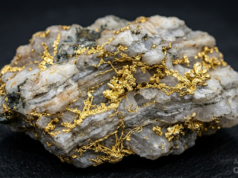

[…] SKARN DEPOSITS […]
Good day everyone, I wanted to share my thoughts on a platform I’ve been exploring recently called alpha66, the overall experience has been quite satifactory, and I felt compelled to mention alpha66 app for those who may be intrested in learning more. Best regards.