Every geologist, prospector, and rock hound has experienced that sudden rush of adrenaline when a glint of yellow catches their eye in a rock or a stream bed. Is it the ultimate prize, or is it nature’s most famous trickster?
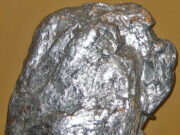
Pyrite (iron sulfide) has earned the nickname “Fool’s Gold” because its brassy, metallic luster has deceived countless people throughout history. However, to a trained eye, real gold and pyrite are completely different minerals. Whether you are panning in a river or examining a quartz vein, here is a complete geological guide to telling them apart.

Visual Differences: Color and Habit
Before you break out any tools, a close visual inspection can often reveal the truth.
- Color: While both are metallic and yellow, their hues differ. Real gold has a warm, buttery, sun-yellow color that looks the same from any angle and does not tarnish. Pyrite has a paler, “brassy” yellow color. If you look closely, pyrite often shows a slight tarnish on its surface, sometimes appearing iridescent or greenish.
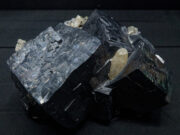
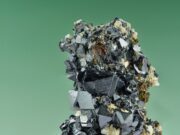
- Crystal Habit (Shape): This is a major giveaway. Pyrite frequently forms perfect, sharp geometric shapes—most commonly cubes or pyritohedrons (12-faced crystals). Its faces often have parallel lines called striations. Gold, on the other hand, rarely forms distinct crystals. It is usually found as shapeless nuggets, flat flakes, or wire-like forms.
2. The Streak Test (The Most Reliable Method)

If visual inspection isn’t enough, the streak test is the definitive field test. A streak test involves rubbing the mineral against a piece of unglazed porcelain (a streak plate) to see the color of its powdered form.
- Pyrite’s Streak: When you rub pyrite on a streak plate, it leaves a dark, greenish-black powder.
- Gold’s Streak: Real gold will leave a pure yellow streak.
(Pro Tip: If you don’t have a standard geological streak plate, the unglazed bottom rim of a ceramic coffee mug works perfectly in a pinch!)
3. The Hardness Test
Minerals are rated on the Mohs scale of mineral hardness, from 1 (softest) to 10 (hardest).
- Gold is soft: Gold has a Mohs hardness of about 2.5 to 3. You can easily scratch it with a copper penny, a steel pocketknife, or even a hardened fingernail.
- Pyrite is hard: Pyrite has a Mohs hardness of 6 to 6.5. A pocket knife or a copper penny will not scratch it. In fact, pyrite is hard enough to scratch glass. If you strike pyrite with a piece of steel, it will create sparks (the name “pyrite” comes from the Greek word pyr, meaning fire).
4. Malleability: The Hammer Test
How the mineral reacts to physical stress is entirely dictated by its atomic structure.
Take a small pin or the tip of a knife and press it firmly into the mineral.
- Because gold is highly malleable (like lead), it will dent or flatten under pressure. If you hit it with a hammer, it will squash into a thinner sheet without breaking.
- Pyrite is brittle. If you press a pin into it, or strike it with a hammer, it will splinter, shatter, and crumble into a powder.
The Geological Irony
While pyrite might be called “Fool’s Gold,” geologists know that the joke is sometimes on the fool. Pyrite and gold form in similar hydrothermal environments and are frequently found together. In some specific deposits, pyrite crystals actually contain microscopic amounts of real gold locked inside their crystal lattice (known as “auriferous pyrite”).
So, the next time you find a shiny, brassy cube in a rock, don’t throw it away immediately. Even if it is Fool’s Gold, it’s a beautiful mineral and a great addition to any geological collection!