The Halide Minerals: From Evaporite Basins to Hydrothermal Veins
While silicate minerals form the backbone of the Earth’s crust, halide minerals tell a story of extremes. Characterized by a dominant halogen anion (such as chlorine, fluorine, bromine, or iodine), these minerals represent two vastly different geological environments: the massive, sun-baked evaporation of shallow marine basins, and the complex, fluid-rich late stages of magmatic-hydrothermal systems.
For exploration geologists, understanding halides is critical. They act as structural traps, massive industrial resources, and key indicator minerals for deep-seated ore deposits.
1. The Chemical Foundation of Halides
Halide minerals are defined by their simple ionic bonds, typically forming between an alkali or alkaline earth metal (like sodium, potassium, or calcium) and a halogen. This ionic bonding gives them distinct characteristics: they are generally soft, have relatively low specific gravities, often exhibit perfect cleavage, and most are highly soluble in water. They predominantly crystallize in the isometric (cubic) system, creating perfect cubes and octahedrons.
2. The Evaporite Giants (Chlorides)
The chloride group is dominated by minerals formed through the evaporation of restricted marine basins or terminal lakes in arid environments.

- Halite (NaCl): The most abundant halide. Beyond its obvious use as table salt, massive halite beds (rock salt) play a crucial role in basin architecture. Because halite behaves plastically under pressure, it flows to form salt domes and diapirs. These structures are the ultimate impermeable seals, creating massive structural traps for hydrocarbons and heavily influencing the migration of basinal brines responsible for Mississippi Valley-Type (MVT) lead-zinc deposits.
- Sylvite (KCl): Known economically as potash, sylvite is the primary global source of potassium for fertilizers. It is more soluble than halite and precipitates only in the final, most concentrated stages of basin evaporation. Differentiating between massive halite and sylvite layers is a core task in evaporite basin exploration.
3. The Hydrothermal Vector (Fluorides)
Unlike the highly soluble chlorides, fluorides are generally insoluble and are intimately tied to magmatic and hydrothermal processes.
-
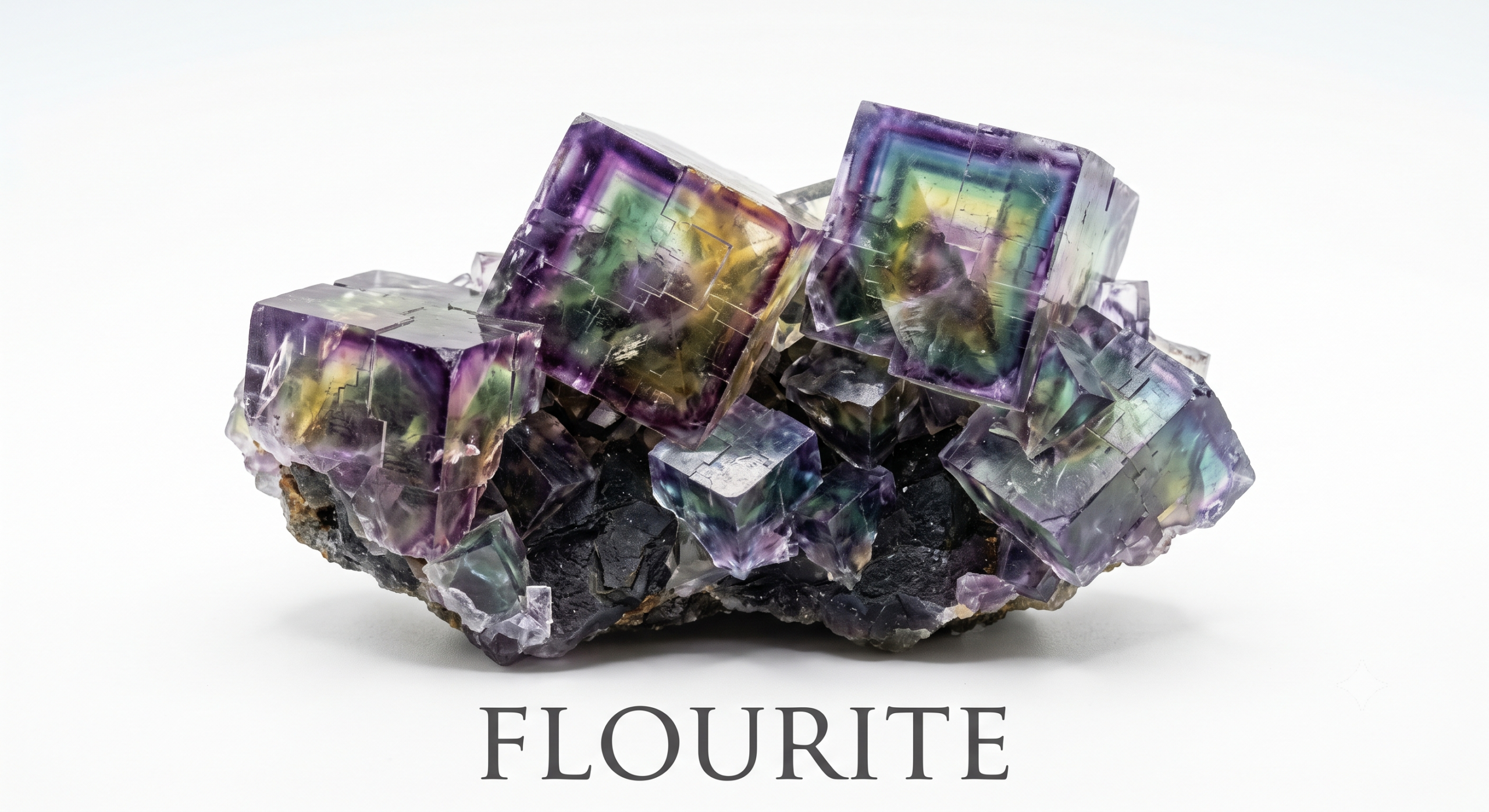
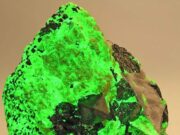
Fluorite (CaF2): This is the flagship halide for economic geologists. Fluorite is a major gangue mineral in a wide variety of hydrothermal systems. It is commonly found alongside sphalerite and galena in MVT deposits, in epithermal precious metal veins, and as a critical indicator in greisen and skarn systems associated with highly fractionated, tin-tungsten-bearing granites. Its massive color variation, perfect octahedral cleavage, and characteristic fluorescence make it an unmistakable vector in the field.

4. Supergene and Rare Halides
Halides can also form as secondary alteration products in the oxidized zones of ore deposits, particularly in arid to hyper-arid climates.

- Atacamite (Cu2Cl(OH)3): A copper chloride hydroxide. In arid regions where primary, shallow, and structurally controlled copper sulfides (like chalcopyrite) undergo intense supergene oxidation in the presence of saline groundwater, atacamite forms as a striking green secondary mineral. Recognizing atacamite in outcrop is a direct vector toward underlying copper sulfide mineralization in desert environments.

- Cryolite (Na3AlF6): A rare aluminum-bearing halide traditionally found in specific, highly evolved pegmatites. While historically critical as a flux for aluminum smelting, synthetic cryolite has mostly replaced it, making natural cryolite a unique mineralogical anomaly.
Whether you are logging core in a massive evaporite sequence, mapping the alteration halo of a greisen system, or investigating supergene copper anomalies in arid terrain, halides provide clear, unmistakable clues about the geochemical history of the deposit.