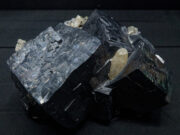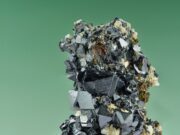
Willemite mineral (zinc silicate, Zn₂SiO₄) represents one of the most intriguing and economically vital non-sulfide zinc ores in economic geology. Containing theoretically 58.68% elemental zinc (73.04% ZnO), this orthosilicate mineral rivals primary sphalerite in metal concentration while offering a unique metallogenic footprint distinct from typical seafloor massive sulfides.
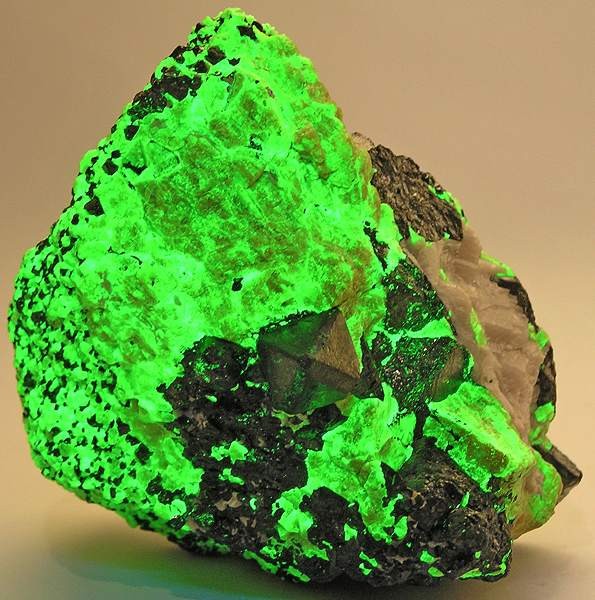
Renowned among geologists and mineral collectors for its intense, electric-green fluorescence and phosphorescence under shortwave ultraviolet (SW-UV) radiation, the Willemite mineral forms under specialized geological conditions where sulfur activity is low and oxygen fugacity is elevated. It serves as the cornerstone commodity in globally significant hypogene non-sulfide deposits, such as the giant Vazante deposit in Brazil and the historic metamorphic zinc ores of Franklin and Sterling Hill, New Jersey.
This comprehensive guide details the crystallography, physical diagnostic properties, UV luminescence mechanisms, non-sulfide deposit classifications, and exploration criteria of the Willemite mineral.
1. Crystallography and Chemical Composition of Willemite Mineral
The Willemite mineral belongs to the nesosilicate (orthosilicate) subclass and crystallizes in the trigonal crystal system (rhombohedral class, space group R-3). Structurally, it is isostructural with phenakite (Be₂SiO₄), characterized by independent silicon-oxygen tetrahedra (SiO₄⁴⁻) linked exclusively by tetrahedrally coordinated zinc cations (ZnO₄⁶⁻).

Chemical Formula: Zn₂SiO₄ (Theoretical: 58.68% Zn, 12.60% Si, 28.72% O)
Crystal System: Trigonal (Rhombohedral, R-3)
Unit Cell Parameters: a = 13.93 Å, c = 9.31 Å, Z = 18
Structure Type: Phenakite-type 3D Framework of Corner-Sharing Tetrahedra
Cleavage: Poor/Indistinct on {0001} and {11-20}
Key Trace Substitutions: Mn²⁺, Fe²⁺, Mg²⁺, Ca²⁺, Pb²⁺
While end-member Willemite is purely zinc silicate, divalent cations frequently substitute for zinc in the trigonal lattice:
- Manganese Substitution (Troostite Variety): Manganese (Mn²⁺) readily substitutes for zinc up to several weight percent. High-manganese varieties (historically termed “troostite”) display distinct reddish-brown, flesh-pink, or dark amber colors and are intimately associated with franklinite and zincite in skarn-like metamorphic suites.
- Iron and Lead Content: Ferrous iron (Fe²⁺) substitutes in minor quantities, which suppresses optical fluorescence. Trace lead and germanium can also partition into willemite during epigenetic hydrothermal replacement.
2. Physical Diagnostic Properties and Ultraviolet Fluorescence

Unlike metallic sulfides such as galena or chalcopyrite, the Willemite mineral is a transparent to translucent silicate displaying a wide palette of daylight colors, requiring specific physical and optical diagnostic tests:
| Diagnostic Property | Hand Specimen & Physical Expression | Optical Microscopy (Thin Section) |
|---|---|---|
| Daylight Color | Apple-green, honey-yellow, white, gray, reddish-brown (troostite), or flesh-pink. | Colorless to pale yellow; non-pleochroic in transmitted light. |
| Luster & Transparency | Vitreous to resinous; transparent crystals to opaque massive granular ores. | High relief relative to quartz and calcite (n = 1.691 – 1.719). |
| Hardness & Tenacity | Mohs 5.5 (distinctly harder than calcite and sphalerite, softer than quartz). Brittle. | Uniaxial positive (+); strong birefringence (δ = 0.028). |
| Specific Gravity | 3.9 – 4.2 g/cm³ (heavy for a silicate mineral due to high zinc concentration). | N/A |
| Cleavage & Fracture | Indistinct/poor basal cleavage; irregular to conchoidal fracture. | Prismatic parting or fracturing common in deformed shear zones. |
| UV Luminescence | Intense bright neon-green under shortwave UV (254 nm); pronounced phosphorescence. | Cathodoluminescence (CL) displays brilliant green emission zones. |
The Physics of Willemite Fluorescence:

The legendary green glow of the Willemite mineral is governed by trace divalent manganese (Mn²⁺) occupying tetrahedral zinc sites. Within the ZnO₄ coordination polyhedra, UV photon absorption promotes electronic transitions in the 3d⁵ orbital shell of the Mn²⁺ activator ion. The subsequent relaxation releases green light centered precisely at 525 nanometers (nm). In pure synthetic Zn₂SiO₄ without manganese, fluorescence is absent, confirming Mn²⁺ as the indispensable luminescent activator.
3. Genetic Models: How Willemite Forms Without Sulfur
In most hydrothermal environments, dissolved zinc immediately precipitates as sphalerite (ZnS) due to high sulfur availability. The precipitation of the Willemite mineral requires specialized low-sulfur, high-silica, oxidized hydrothermal regimes:
     [ HYPOGENE PATHWAY (Vazante-Type) ]            [ SUPERGENE PATHWAY (Beltana-Type) ]
                      │                                              │
      Low-Sulfur Hydrothermal Fluids (150-300°C)      Subaerial Oxidation of Primary Sphalerite
                      │                                              │
       Reaction with Silicified Dolostones           Dissolution: ZnS + 2 O₂ ──► Zn²⁺ + SO₄²⁻
                      │                                              │
    2 Zn²⁺(aq) + SiO₂(aq) + 2 H₂O ──► Zn₂SiO₄ + 4 H⁺    Neutralization by Silicate-Carbonate Rocks
                      │                                              │
    ══════════════════▼══════════════════════════════════════════════▼══════════════════
                     HYDROTHERMAL / REPLACEMENT WILLEMITE ORE BODY
Key Geochemical Constraints for Willemite Stability:
- Extremely Low Sulfur Fugacity (fS₂): The fluid must be depleted in reduced sulfur (H₂S/HS⁻); otherwise, sphalerite precipitates instantaneously according to:
Zn₂SiO₄ + 2 H₂S ↔ 2 ZnS + SiO₂ + 2 H₂O. - Neutral to Alkaline pH: Neutralized fluids buffered by host carbonate rocks promote silica-zinc complex breakdown and willemite precipitation.
- Elevated Temperature Window: Hydrothermal willemite typically forms between 150°C and 280°C in hypogene systems, whereas low-temperature weathering (<60°C) favors hemimorphite [Zn₄Si₂O₇(OH)₂·H₂O] or smithsonite [ZnCO₃].
4. Major Non-Sulfide Zinc Ore Deposits Worldwide
Economic geologists categorize willemite-dominant deposits into three distinct metallogenic classes:
A. Structurally Controlled Hypogene Systems (Vazante-Type)
The Vazante Zinc Mine (Minas Gerais, Brazil) is the world’s premier economic willemite deposit, hosting over 20 million tonnes of high-grade ore (~18% Zn). Hosted within Neoproterozoic dolomitic carbonates of the Vazante Group, willemite occurs in major fault-breccia shear zones. Hydrothermal fluids leached zinc from surrounding basinal rocks and reacted with pervasive hydrothermal quartz-carbonate alteration, forming stratabound massive willemite-hematite-dolomite ore bodies devoid of primary sulfides.
B. High-Grade Metamorphic Carbonate-Hosted Deposits (Franklin & Sterling Hill)
The Proterozoic zinc deposits of Franklin and Sterling Hill, Sussex County, New Jersey, represent the most famous willemite occurrence on Earth. Here, stratiform lenses consisting of willemite, franklinite [(Fe,Mn,Zn)(Fe,Mn)₂O₄], and zincite (ZnO) are hosted in granular calcite marble. These unique sulfide-free bodies formed via granulite-facies metamorphism (750°C, 5 kbar) of pre-existing exhalative iron-zinc carbonate-hydroxy-silicate protoliths, generating enormous coarse-grained masses of troostite and gemmy willemite.
C. Karst- and Fault-Controlled Supergene Oxidation Deposits
In semi-arid, tectonically active terrains (such as Beltana, South Australia and Skorpion, Namibia), willemite precipitates in the deep oxidized profiles of pre-existing MVT or VMS deposits. Deep groundwater circulation enriched in silica reacts with oxidized zinc-bearing acidic solutions within carbonate karst cavities, precipitating willemite alongside smithsonite and hemimorphite.
5. Field Identification and How to Differentiate Look-Alikes
Because the Willemite mineral lacks metallic luster and displays variable daylight colors, field geologists differentiate it from commonly associated silicates and carbonates using four primary diagnostic criteria:
- Shortwave UV Lamp Test (Definitive): Under portable 254 nm shortwave UV lamps, willemite fluoresces an intense, unmistakable brilliant green. This rapid field test allows geologists to identify non-sulfide zinc ore instantly in core sheds and underground stopes.
- Specific Gravity vs. Silicates: Willemite feels noticeably heavy in hand specimens (density ~4.0 g/cm³), distinctly heavier than quartz (2.65 g/cm³), beryl (2.7 g/cm³), or epidote (3.4 g/cm³).
- Hardness vs. Carbonates: While smithsonite and calcite effervesce readily in cold dilute hydrochloric acid (HCl), willemite does not effervesce and scratches calcite easily (Mohs 5.5 vs. 3.0).
- Paragenetic Association: In non-sulfide ore systems, willemite commonly coexists with dark red franklinite, red zincite, specular hematite, or calamine alteration crusts.
Summary & Key Takeaways
- High-Grade Non-Sulfide Ore: The Willemite mineral is the primary silicate ore of zinc, containing ~58.7% Zn in a trigonal orthosilicate framework.
- Sulfur-Deficient Genesis: Forms exclusively in high-oxygen, low-sulfur hydrothermal regimes or deep supergene oxidation profiles where sphalerite cannot stabilize.
- Luminescent Marker: Divalent manganese (Mn²⁺) substitution induces iconic, brilliant neon-green luminescence under shortwave UV radiation.
- Global Economic Giants: Anchor major commercial operations including Vazante (Brazil) and famous mineralogical districts such as Franklin-Sterling Hill (USA).
Frequently Asked Questions (FAQ)
What is the difference between Willemite and Hemimorphite?
While both are zinc silicates, Willemite (Zn₂SiO₄) is an anhydrous orthosilicate with a higher zinc concentration (~58.7% Zn), higher hardness (Mohs 5.5), and intense green UV fluorescence. In contrast, Hemimorphite [Zn₄Si₂O₇(OH)₂·H₂O] is a hydrous sorosilicate with lower zinc content (~54.3% Zn), tabular/bladed crystal habit, lower density (~3.45 g/cm³), and typically displays weak or absent UV fluorescence.
Why does Willemite glow green under UV light?
The green fluorescence of Willemite is caused by trace amounts of manganese (Mn²⁺) substituting for zinc in its tetrahedral crystal lattice. Absorption of 254 nm ultraviolet energy excites electrons in the manganese activator ions, which subsequently emit visible green light at 525 nm as they return to ground state.
Can Willemite ore be processed using standard sulfide flotation?
No. Because Willemite is a silicate rather than a sulfide, standard xanthate flotation methods used for sphalerite are ineffective. Commercial processing of willemite ore (such as at the Vazante mine) typically relies on heavy media separation (HMS), magnetic separation (to remove hematite and franklinite), and specialized direct acid leaching or amine flotation circuits.