
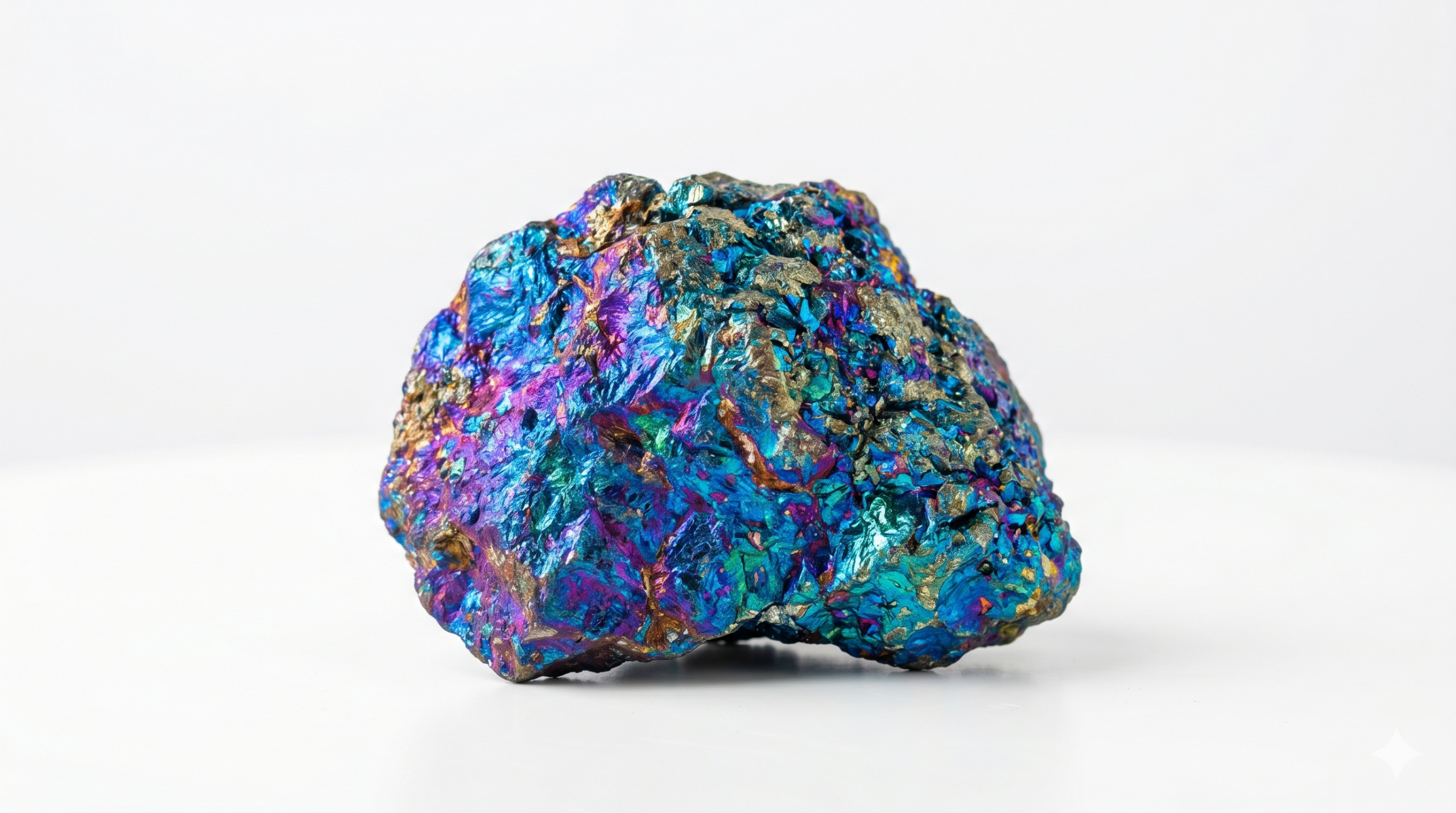
What is Bornite? The Most Spectacular and High-Grade Copper Ore
While chalcopyrite is the main source of copper globally, no copper mineral is as high-grade, spectacular, and exciting for a geologist standing by a core box as Bornite. Often known as “Peacock Ore” due to its colorful appearance in the field, bornite mineral is one of the most valuable targets in mining operations with its massive copper content exceeding 63%.
Before diving into the purple and deep blue reflections found within drill cores, let’s quickly review the physical and chemical identity of this mineral:
Bornite Mineral Properties
| Property | Geological Data | Description |
| Chemical Formula | Cu5FeS4 | Copper Iron Sulfide (~63.3% Cu, 11.1% Fe, 25.6% S) |
| Mineral Group | Sulfides | Transition metal sulfides. |
| Crystal System | Orthorhombic (Varies with temp.) | Rarely forms cubic crystals, mostly massive. |
| Hardness (Mohs) | 3.0 | Softer than chalcopyrite, easily scratched by a knife or needle. |
| Specific Gravity | 5.06 – 5.08 g/cm³ | Quite heavy for a metallic sulfide. |
| Color (Fresh Fracture) | Copper Red / Bronze Brown | Pinkish-brown in the first seconds of fracturing. |
| Color (Tarnished) | Iridescent Purple, Blue, Red | Takes on the famous “peacock” colors upon exposure to air. |
| Streak | Grayish Black | The color of its powder on a streak plate. |
What is Bornite (Peacock Ore)?

It is a sulfide mineral containing a massive amount of copper (Cu) in its structure. It is named after the 18th-century Austrian mineralogist Ignaz von Born.
Its most characteristic feature in the field is the thin oxidation film that develops within seconds or minutes on surfaces exposed to air. The moment you break the rock, the fresh surface is a pinkish-brown color, but as it reacts with moisture and oxygen in the atmosphere, a dazzling iridescence of purple, blue, violet, and greenish tones forms on its surface.
Important Deposit Types
If chalcopyrite is about abundance, bornite is about absolute richness. Intersecting bornite mineral zones in an exploration project multiplies the economic value of the mine. The primary geological environments where it is found include:
- Porphyry Copper Deposits: Bornite is found at the very “heart” of hydrothermal systems. It represents the hottest and most copper-rich core of the system.
- Secondary (Supergene) Enrichment Zones: Secondary bornite and chalcocite zones form when copper, dissolved by acidic waters near the surface, percolates below the groundwater table and replaces primary chalcopyrite.
- Skarn Deposits and Pegmatites: Massive bornite lenses are frequently observed in high-temperature contact metamorphic zones where magmatic fluids react with surrounding host rocks.
- SEDEX and Continental Red Beds: It can form within clastic rocks by the precipitation of copper carried by high-salinity fluids in sedimentary basins.
Bornite in Core Logging and the System Core
For an exploration geologist, seeing bornite while logging core is a critical threshold. In porphyry systems, as drilling progresses from outer alteration halos (propylitic, argillic) into the center—namely the Potassic Alteration zone (biotite and K-feldspar)—the sulfide paragenesis changes. Pyrite abundance decreases, chalcopyrite increases, and as you descend into the core of the system, chalcopyrite gives way to bornite. Intersecting massive or veinlet bornite in the core sends the geologist a clear message: “You are currently in the hottest and richest root zone of the hydrothermal heat source.”
34-Element Assay Interpretation: Bornite and Gold (Au) Correlation
When the 34-element ICP-MS or assay results return from the lab, bornite zones provide fantastic geochemical signals. Due to its formula (Cu5FeS4), copper (Cu) values skyrocket above 1% in these zones, while iron (Fe) and sulfur (S) drop relatively compared to chalcopyrite zones. More importantly, in porphyry and orogenic systems, the bornite structure is highly generous in hosting gold (Au) within its crystal lattice or holding electrum inclusions. The strongest positive correlation between copper and precious metals like gold and silver (Ag) is typically seen in bornite zones.
Bornite Under the Microscope and “Exsolution” Textures

When sections are polished and placed under a reflected light ore microscope, it shines in the dark with its famous pinkish-brown color. But the real show is the behavior of copper and iron, which coexist at high temperatures, during the cooling phase:
Exsolution Lamellae: As the temperature drops, the excess iron within the bornite is expelled from the structure, forming microscopic chalcopyrite lamellae in the shape of fine needles or a “basket-weave” pattern within the bornite sea. These intergrown exsolution textures serve as an excellent geothermometer, indicating the temperature at which the ore formed.
Bornite Metallurgy: The Flotation and Smelting Advantage
Processing bornite is a dream for mining engineers and metallurgists. Processing mineral (63.3% Cu) instead of chalcopyrite (34.5% Cu) is vastly more profitable because:
- It concentrates collected during the flotation stage provide the processing plant with an exceptionally high copper grade.
- Since its iron (Fe) and sulfur (S) ratio is much lower, the amount of sulfur dioxide (SO2) gas emitted into the atmosphere and the slag produced during melting in smelting furnaces are significantly reduced. Much more cathode copper is obtained with less energy and less waste.
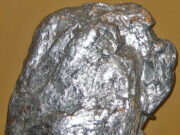
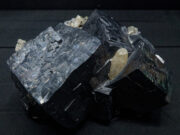
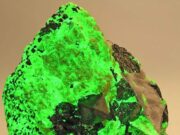
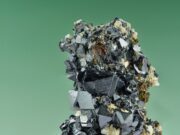
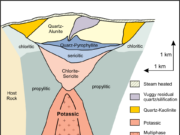

[…] Sulfides: Primary chalcopyrite and bornite, with low total sulfide volume (< 2–3 vol.%). The bornite-rich core represents the absolute […]