The Ultimate Guide to Chert: Formation, Properties, and Exploration Significance
To the ancient world, it was the ultimate tool-making material. To a modern exploration geologist, it is a crucial indicator of specific paleoenvironments, hydrothermal activity, and deep-sea sedimentation.
Chert is a hard, dense, and exceptionally fine-grained chemical sedimentary rock. Made almost entirely of silica, this fascinating rock tells a story of microscopic marine life, chemical replacement, and dynamic fluid interactions within the Earth’s crust.
In this comprehensive guide, we will dive deep into what chert is, how it forms, its key physical properties, and how to instantly identify it in the field.
What is Chert?
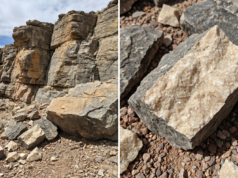
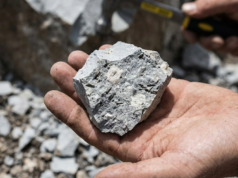
Geologically speaking, chert is a microcrystalline or cryptocrystalline sedimentary rock composed of silicon dioxide (SiO₂). Because its quartz crystals are so infinitesimally small, they cannot be seen even with a standard hand lens, giving the rock a smooth, sometimes waxy or glassy appearance.
While “chert” is the broad geological term, this rock has several well-known varieties based on color and trace impurities:
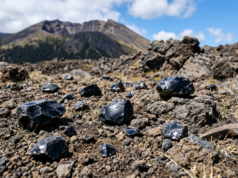
- Flint: A dark grey to black variety of chert, typically found as nodules in chalk or limestone formations. Its dark color comes from organic matter inclusions.
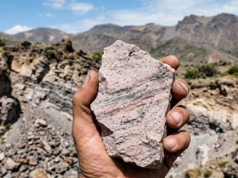
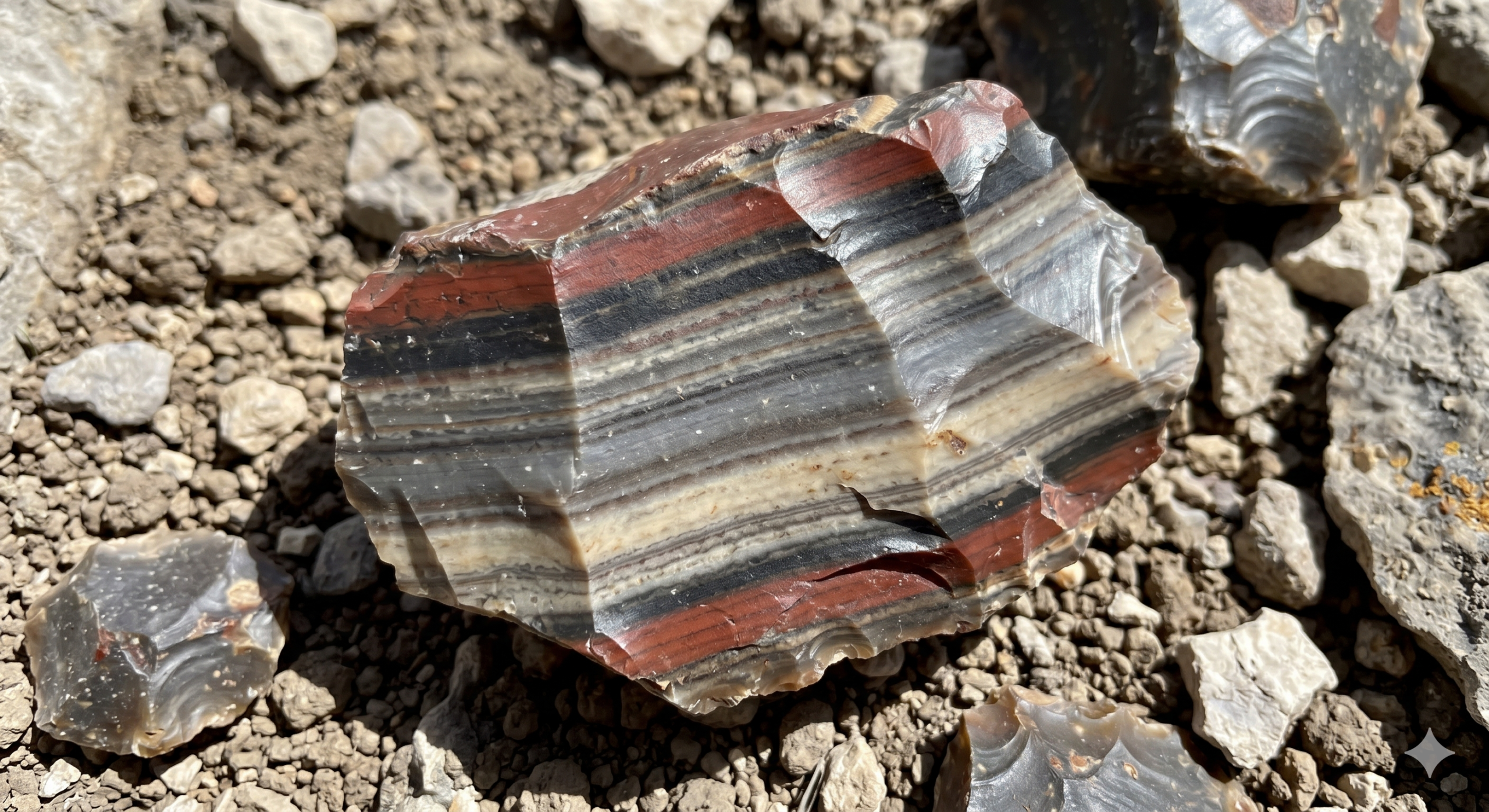
- Jasper: A vibrant red, yellow, or brown variety. The striking colors are the result of iron oxide (Fe₂O₃) impurities.
- Agate: A banded variety of chalcedony/chert, usually formed in the cavities of volcanic rocks.
How Does It Form? (Genesis Models)

Unlike clastic sedimentary rocks (like sandstone) that form from the physical weathering of older rocks, chert forms through chemical precipitation or biological activity. There are three primary genesis models:
1. Biogenic (Biochemical) Chert
This is the most common formation model. In deep marine environments, far below the Carbonate Compensation Depth (CCD) where calcite dissolves, microscopic marine organisms like diatoms, radiolarians, and siliceous sponges extract dissolved silica from seawater to build their skeletons. When they die, their silica-rich shells rain down onto the ocean floor, accumulating as a siliceous ooze. Over millions of years, compaction and diagenesis convert this ooze into solid, bedded chert (such as radiolarite).
2. Replacement Chert (Nodular )
Many cherts, particularly flint, form through a process of chemical replacement (diagenesis). As groundwater rich in dissolved silica percolates through porous carbonate rocks (like limestone or chalk), the silica begins to precipitate, replacing the calcium carbonate (CaCO₃) molecule by molecule. This often results in irregular, rounded chert nodules or lenses embedded within limestone beds.
3. Primary Chemical Precipitation
In certain unique environments, silica can precipitate directly from water without biological help. This is commonly seen in:
- Hydrothermal Systems: Superheated, silica-rich fluids reaching the surface can precipitate chert-like layers known as siliceous sinter (common in epithermal gold-silver systems).
- Precambrian Oceans: Before silica-secreting organisms evolved, ancient oceans were supersaturated with dissolved silica. This led to massive primary precipitation, famously forming the silica bands in Banded Iron Formations (BIFs).
Physical and Chemical Properties
Knowing the exact physical properties of chert is essential for core logging and field mapping.
- Chemical Composition: SiO₂ (Silicon Dioxide)
- Hardness: 7 on the Mohs scale. (It is significantly harder than glass and steel).
- Fracture: Conchoidal. (It breaks with smooth, curved surfaces resembling the inside of a seashell—this is why it was prized for making sharp arrowheads).
- Luster: Dull, waxy, or vitreous.
- Porosity: Extremely low; it is an incredibly dense rock.
- Color: Highly variable depending on impurities. Can be white, grey, black, brown, red, or green.
Field Identification: Chert vs. Limestone
In the field, bedded chert and fine-grained micritic limestone can look remarkably similar, especially when weathered. However, distinguishing between them is critical for accurate geological mapping. Here are the two most reliable field tests:
- The Scratch Test (Hardness): Chert (hardness 7) will easily scratch your steel geological hammer and a glass plate. Limestone (calcite, hardness 3) will not scratch steel or glass, and can easily be scratched by a steel blade.
- The Acid Test: When a drop of cold, dilute Hydrochloric Acid (10% HCl) is applied, limestone will vigorously fizz and effervesce. Chert, being silica-based, will show zero reaction to the acid.
Significance in Mineral Exploration
For economic geologists, chert is much more than just a sedimentary rock; it is a critical vector.
- In Volcanogenic Massive Sulfide (VMS) deposits, exhalative chert horizons (often called “cherty tuffs” or “exhalites”) serve as vital stratigraphic marker beds indicating the cessation of volcanism and the settling of hydrothermal fluids.
- In Epithermal Gold Systems, chalcedonic quartz and chert-like siliceous sinter indicate the paleosurface or the upper boiling zones of hydrothermal systems, guiding geologists toward deeper, high-grade feeder veins.
- In Banded Iron Formations (BIFs), chert layers alternate with hematite or magnetite, forming the world’s most significant iron ore deposits.
Common Uses
Historically, the conchoidal fracture of chert made it the ultimate material for survival. Early humans expertly knapped it to create sharp scrapers, arrowheads, and spear points. When struck against iron-bearing rocks (like pyrite) or steel, it produces sparks, a property utilized in early flintlock firearms.
Today, while no longer used for weaponry, massive chert deposits are occasionally crushed and used as road surfacing material or durable aggregate in specific construction environments due to its exceptional hardness and resistance to weathering.