
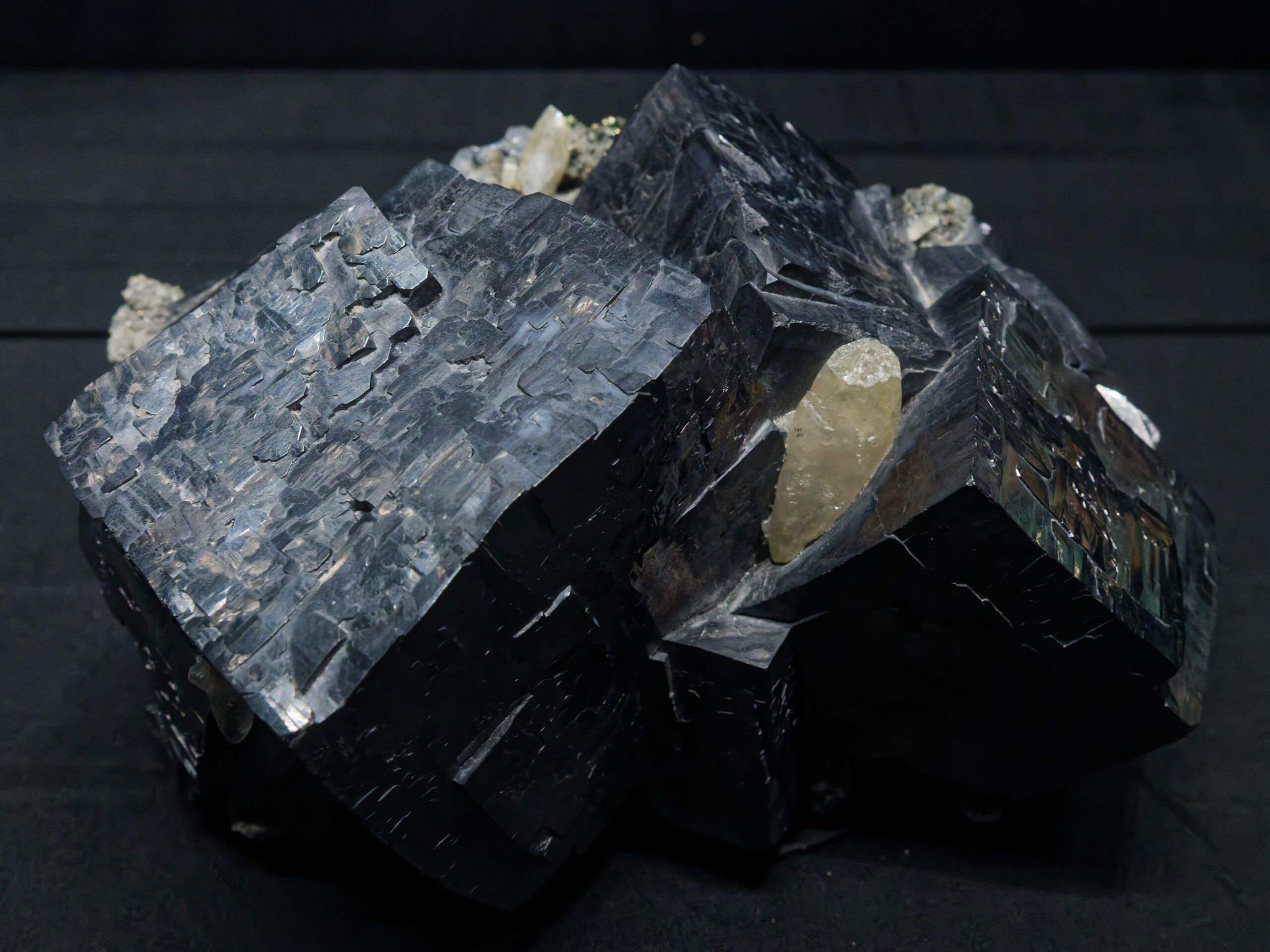
The Galena mineral (lead sulfide, PbS) is the primary global ore of lead and one of the most (important) geological reservoirs for primary silver production. Crystallizing in unmistakable, mirror-bright metallic cubes and octahedrons, this dense sulfide has served human civilization for over 5,000 years—from ancient smelting and cosmetics to modern lead-acid energy storage, radiation shielding, and semiconductor research.
In economic geology, the Galena mineral is the inseparable paragenetic twin of sphalerite (ZnS). Together, they anchor the world’s largest base-metal accumulations across submarine exhalative basins and carbonate platforms. Furthermore, because trace silver, bismuth, and antimony readily substitute into its crystal lattice, “argentiferous galena” frequently drives the economic viability of polymetallic mining camps.
This comprehensive geological guide examines the isometric crystallography, physical and optical diagnostic properties, coupled silver substitution mechanisms, deposit associations, supergene oxidation profiles, and field identification tests of the Galena mineral.
1. Crystallography and Chemical Composition of Galena Mineral
The Galena mineral crystallizes in the highest symmetry class of the isometric (cubic) crystal system—the hexoctahedral class (space group Fm-3m). Its internal atomic arrangement is isostructural with halite (NaCl, rock salt), where lead cations (Pb²⁺) and sulfur anions (S²⁻) form two interpenetrating face-centered cubic (FCC) lattices. Each lead atom is surrounded by six sulfur atoms in regular octahedral coordination, and vice versa.
Chemical Formula: PbS (Stoichiometric: 86.60% Pb, 13.40% S)
Crystal System: Isometric — Hexoctahedral Class (4/m -3 2/m)
Space Group & Unit Cell: Fm-3m | a = 5.936 Å, Z = 4
Coordination Geometry: Octahedral [6:6] (Halite Structure Type)
Cleavage: Perfect Cubic in 3 directions at 90° {001}
Key Solid-Solution Substitutions: Ag⁺, Bi³⁺, Sb³⁺, Se²⁻, Te²⁻, Cu⁺, Cd²⁺
According to crystallographic data cataloged by Mindat Mineralogy Database, galena forms a complete solid-solution series with clausthalite (PbSe) and altaite (PbTe) through anion substitution of selenium and tellurium for sulfur. The bond character in PbS combines ionic and metallic-covalent interactions, yielding narrow-bandgap semiconductor behavior (~0.41 eV at room temperature) that famously enabled early “cat’s-whisker” crystal radio detectors.
2. Physical and Optical Diagnostic Properties

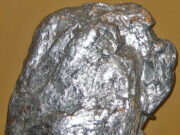
Whether logging drill core or inspecting polished sections under a reflected-light microscope, geologists identify the Galena mineral through its high density, bright metallic luster, and diagnostic three-directional cubic cleavage:
| Diagnostic Property | Hand Specimen & Physical Expression | Reflected Light Microscopy |
|---|---|---|
| Color & Tarnish | Bright lead-gray to silvery-white on fresh surfaces; dulls to matte gray or iridescent blue tarnish upon oxidation. | Pure white with a faint pinkish or bluish-gray tint next to sphalerite. High reflectance (~43%). |
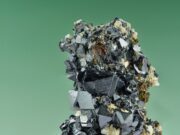
| Crystal Habit | Euhedral cubes {100}, octahedrons {111}, cubo-octahedrons, or coarse-to-fine granular (“steel galena”) masses. | Isotropic; complete extinction under crossed polars without internal reflections. |
| Cleavage | Perfect, effortless cubic cleavage in 3 directions {001} intersecting at exact 90° stepped terraces. | Diagnostic black triangular polishing pits aligned along cleavage traces (cleavage triangles). |
| Hardness & Tenacity | Mohs 2.5 – 2.75 (easily scratched by a copper coin or knife blade). Brittle to slightly sectile. | Very low polishing hardness; softer than sphalerite, chalcopyrite, and pyrite. |
| Specific Gravity | 7.4 – 7.6 g/cm³ (exceptionally heavy in hand specimen; nearly twice as dense as sphalerite). | N/A |
| Streak | Dark lead-gray to grayish-black on unglazed porcelain. | N/A |
In ore microscopy, the black triangular pits produced during mechanical polishing are a textbook hallmark of the Galena mineral. When tectonic stress deforms a lead-zinc orebody, alignments of curved cleavage pits accurately trace ductile crystal-plastic strain within the sulfide matrix.
3. Argentiferous Galena: The Chemistry of Silver Enrichment
A critical economic feature of the Galena mineral is its capacity to host substantial concentrations of silver—often ranging from several hundred parts per million (ppm) up to several weight percent Ag. Historically, “argentiferous galena” has been the world’s single largest source of mined silver.
[ High-Temperature Hydrothermal Pb-Ag-Bi-Sb Fluid (>300°C) ]
                           │
                           ▼
        Coupled Heterovalent Lattice Substitution:
          2 Pb²⁺  ◄────►  Ag⁺ + (Bi³⁺, Sb³⁺)
                           │
                           ▼
             Sub-Solidus Cooling (<200°C)
                           │
                           ▼
  ════════ EXSOLUTION OF MICRO-INCLUSIONS IN GALENA ════════
  (Freibergite, Pyrargyrite, Miargyrite, Acanthite Lamellae)
How Silver Resides Inside Galena:
- Coupled Solid-Solution Substitution: Monovalent silver (Ag⁺) cannot easily replace divalent lead (Pb²⁺) alone without creating a charge imbalance. Instead, silver enters the octahedral lattice via coupled substitution with trivalent bismuth (Bi³⁺) or antimony (Sb³⁺):
2 Pb²⁺ ↔ Ag⁺ + (Bi,Sb)³⁺. At high temperatures (>350°C), complete solid solution exists between PbS and matildite (AgBiS₂). - Sub-Micron Sulfosalt Exsolution: As hydrothermal systems cool below 200°C, the solubility of silver in PbS drops sharply. The dissolved Ag and Sb/Bi unmix (exsolve) along {100} and {111} crystallographic planes as microscopic lamellae and blebs of silver sulfosalts—primarily freibergite [(Ag,Cu)₁₂(Sb,As)₄S₁₃], pyrargyrite (Ag₃SbS₃), diaphorite, and acanthite (Ag₂S).
- Curved Cleavage Faces: High-silver and high-bismuth Galena mineral specimens frequently exhibit slightly curved, stepped, or striated cleavage surfaces due to lattice distortion caused by substituted trace ions and exsolved micro-lamellae.
4. Major Ore Deposit Associations of Galena Mineral
The Galena mineral precipitates across diverse crustal settings, ranging from low-temperature basinal brines to high-temperature magmatic-hydrothermal systems:
A. Sedimentary Exhalative (SEDEX) Deposits
SEDEX basins represent the largest global reservoirs of lead and zinc (e.g., Broken Hill, Mount Isa, and McArthur River in Australia; Sullivan in Canada; Red Dog in Alaska). Here, dense metalliferous basinal brines discharge onto anoxic seafloors along synsedimentary growth faults, precipitating finely laminated beds of galena, sphalerite, and pyrite interbedded with black carbonaceous shales and cherts.
B. Mississippi Valley-Type (MVT) Carbonate-Hosted Deposits
In epigenetic MVT districts (such as the Viburnum Trend and Old Lead Belt in Missouri, Pine Point in Canada, and Upper Silesia in Poland), warm saline brines (80°C–150°C) migrate through dolomitized platform carbonates. The Galena mineral crystallizes in open karst cavities, collapse breccias, and replacement horizons as spectacular coarse cubic crystals associated with sphalerite, dolomite, fluorite, and barite. Unlike magmatic systems, MVT galena is typically low in silver and bismuth.
C. Volcanogenic Massive Sulfide (VMS) Deposits
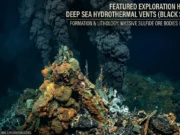
Within polymetallic Volcanogenic Massive Sulfide (VMS) deposits—particularly Bimodal-Felsic (Kuroko-type) and Siliciclastic-Felsic (Bathurst-type) systems—galena concentrates in the cooler, outer and upper stratigraphic zones of the massive sulfide lens (150°C–250°C) alongside sphalerite, barite, and silver-bearing tetrahedrite.
D. Cordilleran Polymetallic Veins, Skarns, and Carbonate Replacement Deposits (CRDs)
In distal magmatic-hydrothermal settings (e.g., Cerro de Pasco and Morococha in Peru; Naica and Santa Eulalia in Mexico; Trepča in Kosovo), high-temperature hydrothermal fluids driven by porphyry stocks replace limestone wallrocks, forming massive chimneys and mantos rich in argentiferous galena, iron-rich sphalerite (marmatite), pyrrhotite, and rhodochrosite.
5. Supergene Oxidation and Weathering Halos

When tectonic uplift exposes primary lead-zinc sulfide orebodies to oxygen-rich meteoric groundwater above the water table, the Galena mineral undergoes chemical weathering. Unlike sphalerite—whose zinc sulfate reaction products are highly soluble and rapidly leached out—lead forms extremely insoluble secondary minerals that armor the primary sulfide core:
- Anglesite (PbSO₄ — Lead Sulfate): In the initial oxidation stage, sulfide sulfur oxidizes to sulfate, forming concentric dark-gray to adamantine rims of anglesite directly coating residual galena nuclei:
PbS + 2 O₂ → PbSO₄. - Cerussite (PbCO₃ — Lead Carbonate): Where oxidizing fluids interact with carbonate host rocks or dissolved atmospheric CO₂, anglesite converts into twinned, reticulated crystals of cerussite (“white lead ore”):
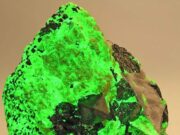
PbSO₄ + H₂CO₃ → PbCO₃ + H₂SO₄. - Pyromorphite [Pb₅(PO₄)₃Cl] & Mimetesite [Pb₅(AsO₄)₃Cl]: In phosphorus- or arsenic-bearing gossans, bright green or yellow hexagonal barrels of pyromorphite and mimetesite develop in the upper oxidized cap, often accompanied by non-sulfide zinc silicates such as willemite and hemimorphite.
6. Field Identification: Differentiating Galena from Look-Alikes
Field geologists can rapidly distinguish the Galena mineral from superficially similar gray metallic minerals using four simple tests:
- Galena vs. Sphalerite (Marmatite): Even pitch-black iron-rich sphalerite displays a resinous sheen, 6-directional dodecahedral cleavage, lower density (~4.0 g/cm³), and a pale yellowish-brown streak. Galena exhibits 90° cubic cleavage, pure metallic luster, high density (7.58 g/cm³), and a dark lead-gray streak.
- Galena vs. Stibnite (Sb₂S₃): Stibnite forms elongated, striated bladed crystals with one direction of cleavage rather than isometric cubes, and melts easily in a simple match flame.
- Galena vs. Specular Hematite (Fe₂O₃): While micaceous or granular hematite appears silvery-gray, it is much harder (Mohs 5.5–6.5) and always yields a diagnostic cherry-red to reddish-brown streak.
- Galena vs. Molybdenite (MoS₂): Molybdenite forms flexible hexagonal folia with a greasy feel, Mohs hardness of 1.0–1.5 (marks paper), and a bluish-gray to greenish streak on glazed porcelain.
7. Metallurgy, Industrial Uses, and Environmental Geochemistry
In mineral processing plants, run-of-mine lead-zinc ore is crushed and ground before undergoing sequential froth flotation. Sodium cyanide (NaCN) and zinc sulfate (ZnSO₄) are added to depress sphalerite and pyrite while xanthate collectors float a high-grade Galena mineral concentrate (typically 60%–70% Pb). During smelting (such as the Imperial Smelting Process or blast furnace sintering), silver, gold, bismuth, and antimony partition into the molten lead bullion and are subsequently refined via the Parkes process (adding zinc to skim off a silver-zinc crust).
From an environmental geochemistry perspective, galena has a lower acid-generating potential than pyrite or pyrrhotite because its oxidation reaction (PbS + 2 O₂ → PbSO₄) consumes oxygen without releasing free H⁺ protons unless ferric iron (Fe³⁺) acts as the primary oxidant. Nevertheless, proper tailings management is mandatory to prevent the mobilization of bioavailable lead into surface watersheds.
Summary & Key Takeaways
- Premier Lead & Silver Ore: The Galena mineral (PbS) is the world’s primary ore of lead (86.6% Pb) and a major global source of byproduct silver via coupled Ag-Bi-Sb lattice substitution.
- Diagnostic Physical Signature: Unmistakably identified by its high specific gravity (7.58 g/cm³), bright metallic lead-gray luster, low hardness (Mohs 2.5), and 3-directional cubic cleavage at 90°.
- Geological Environments: Forms a cornerstone mineral phase in SEDEX basins, MVT carbonate replacements, VMS rooftop zones, and Cordilleran polymetallic veins/skarns.
- Supergene Armor: Weathers in situ into insoluble protective rinds of anglesite (PbSO₄) and cerussite (PbCO₃) within oxidized gossan profiles.
Frequently Asked Questions (FAQ)
Why does Galena break into perfect cubes?
The Galena mineral possesses a halite-type face-centered cubic atomic crystal structure where weak electrostatic planes exist parallel to the {001} cube faces. When struck with a geological hammer, atomic bonds rupture cleanly along these three mutually perpendicular planes, producing stepped 90° cubic fragments at every scale down to microscopic grains.
How can you tell if Galena contains silver in the field?
While laboratory fire assay or ICP-MS analysis is required for exact quantification, argentiferous (silver-rich) galena frequently exhibits fine-grained, steely-granular textures or noticeably curved and striated cleavage faces caused by exsolved microscopic inclusions of silver sulfosalts (such as freibergite and matildite) distorting the host PbS lattice.
Is it safe to handle Galena mineral specimens?
Solid, unweathered Galena mineral crystals have very low solubility in water and skin oils, making brief handling by geologists and collectors safe. However, washing hands after handling samples is standard practice, and inhalation of fine dust during cutting, grinding, or dry core sawing must be strictly avoided, especially if powdery white secondary cerussite (which is highly bioavailable in stomach acid) is present on the specimen surface.


[…] two minerals that superficially resemble the Molybdenite mineral—graphite (C) and fine-grained galena (PbS). Four rapid tests separate them […]