What is Gabbro?
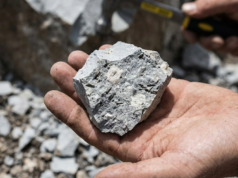
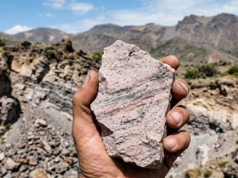
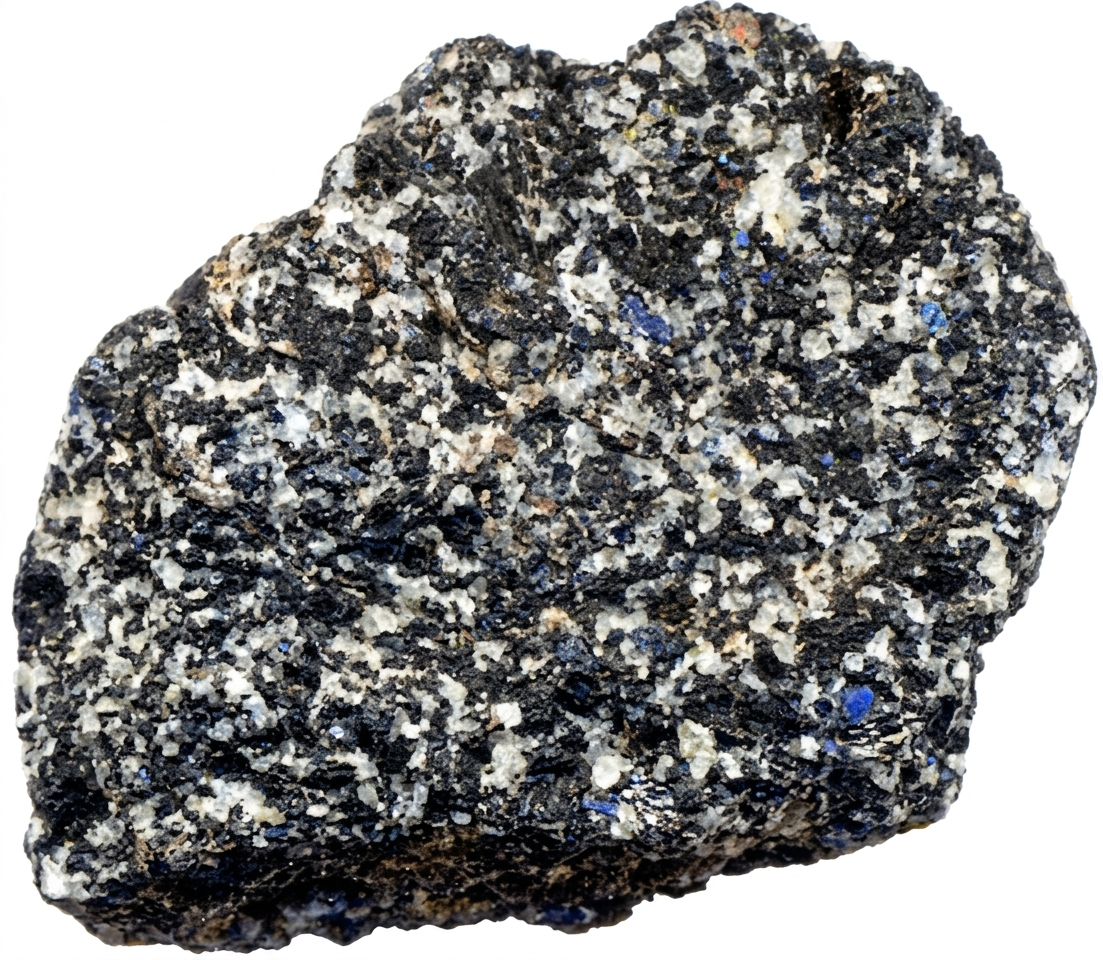
Gabbro rock is a dark-colored, coarse-grained (phaneritic), and mafic intrusive (plutonic) igneous rock. To put it simply, it is the subterranean, slowly-cooled counterpart of the massive black basalts we see on the ocean floor. It is one of the primary building blocks of the lower layers of the oceanic crust
How Does It Form?
The story of gabbro is all about “patience.” Instead of erupting onto the surface, silica-poor, magnesium- and iron-rich (mafic) magma becomes trapped deep within the Earth’s crust. Here, it cools very slowly over thousands or even millions of years. This slow cooling process allows the atoms within the magma to aggregate and form large crystals that are easily visible to the naked eye.

The Role of Fractional Crystallization
As the mafic magma slowly cools deep within the crust, it does not solidify all at once. The formation of gabbro is heavily dictated by a process known as fractional crystallization, famously explained by Bowen’s Reaction Series.
Because different minerals have different melting and freezing points, they crystallize sequentially as the magma temperature drops:
Rhythmic Layering: Successive waves of cooling, crystallization, and settling create distinct bands of different mineral concentrations. This mechanism is exactly how the spectacular, economically vital layered gabbro intrusions (cumulate rocks) are born.
Early Crystallization: High-temperature minerals like olivine and calcium-rich plagioclase are the first to form solid crystals.
Mineral Settling: Because these early-forming mafic minerals are significantly denser than the surrounding liquid magma, gravity pulls them down. They sink and accumulate at the floor of the magma chamber.
Magma Evolution: As the heavy, iron- and magnesium-rich minerals are removed from the liquid, the remaining magma becomes relatively depleted in these elements.
What is Its Mineral Composition?
Gabbro doesn’t favor light-colored quartz or alkali feldspars; its world is dark and heavy. Its essential mineral composition consists of:
- Calcium-Rich Plagioclase (Usually Labradorite): This is the only light-colored component of the rock, though it often shines in gray or dark blue hues.
- Pyroxene (Augite): This is the primary mafic mineral that gives gabbro its characteristic dark green-black color.
- Olivine and Hornblende: Sometimes present, these minerals enhance the rock’s greenish tint.
- Accessory Minerals: Minerals like magnetite, ilmenite, and apatite are found in small quantities but are critical from an economic perspective.
How to Identify It in the Field (Outcrop and Core)?
A geologist uses the following practical tips to identify gabbro in the field or in a core box:
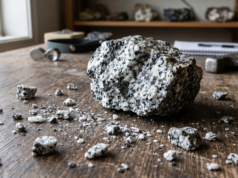
- Visible Crystals (Phaneritic Texture): When you use a hand lens (or even with the naked eye), you can see light-colored plagioclase and dark-colored pyroxenes interlocking like a mosaic, forming large, distinct crystals.
- Sense of Weight (High Density): It is noticeably heavier than a standard granite or limestone. Its high iron and magnesium content gives it a high specific gravity.
- Color Index: It is found in shades of black, dark gray, and dark green. You will never see a light-colored, pinkish, or white gabbro.
- Magnetic Response: Due to the magnetite crystals it contains, you might observe slight deflections in the needle when you bring a hand magnet or a geological compass close to the rock.
Economic Importance (Not Just Crushed Stone!)
While widely used in the construction industry as high-quality crushed stone, railway ballast, or kitchen countertops (often incorrectly marketed as “Black Granite”) due to its durability, gabbro’s true economic importance lies in mining.
In particular, massive Layered Gabbro Intrusions host some of the world’s largest ore deposits. As the magma cools slowly, heavy minerals settle to the bottom, forming:
- Platinum Group Elements (PGE)
- Chromite Deposits
- Nickel-Copper Sulfide deposits
- Titanomagnetite (Titanium) mineralization
The famous Bushveld Complex in South Africa is the greatest proof of how gabbroic rocks have enriched the world.