
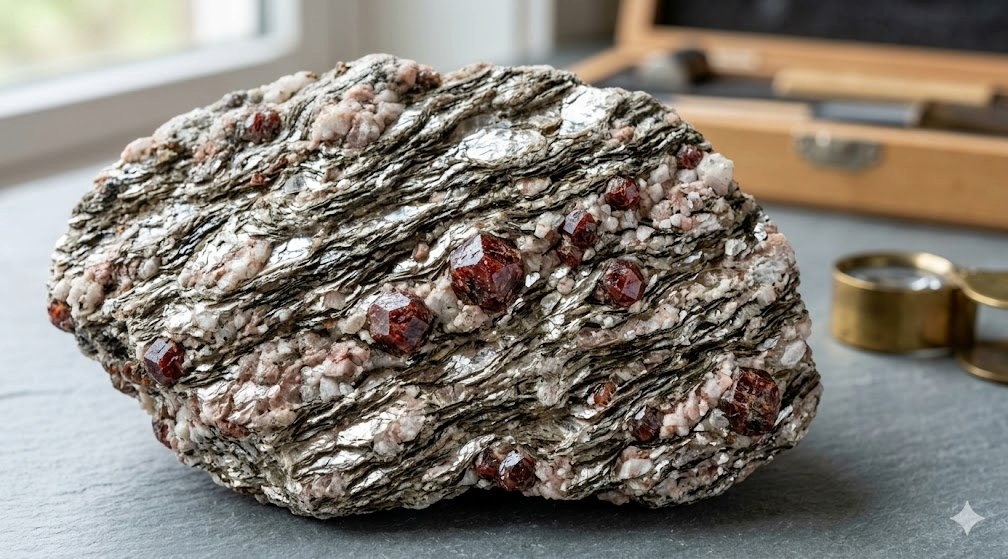

What is Schist?
Schist is a striking, medium-grade metamorphic rock characterized by its distinct, well-developed foliation known as “schistosity.” It is famous among geologists for its glittering, scaly appearance, which comes from large, flat, sheet-like minerals (mostly micas) that have aligned parallel to one another under immense heat and directed pressure deep within the Earth’s crust.
Quick Facts:
- Rock Type: Metamorphic
- Sub-Type: Foliated (Medium to high grade)
- Color: Highly variable; often shiny silver, dark gray, black, green, or brown depending on the dominant minerals.
- Texture: Schistose (Strongly foliated); coarse-grained enough to see individual platy minerals with the naked eye.
- Origin: Regional metamorphism (typically at convergent plate boundaries during mountain building).
Mineral Composition of Schist
Schist is not defined by a specific chemical formula, but rather by its texture and mineral assemblage. It is primarily composed of the following minerals:
- Mica Group (Muscovite and Biotite): Often making up more than 50% of the rock, these sheet silicates are responsible for the rock’s highly reflective, shiny appearance.
- Quartz and Feldspar: Frequently present in smaller amounts, usually forming thin, granular layers between the prominent mica sheets.
- Porphyroblasts (Index Minerals): Schist is famous for hosting large, distinct, beautiful crystals that grow within the mica matrix. Depending on the temperature and pressure of formation, you will often find Garnet, Staurolite, or Kyanite crystals embedded in the rock (creating variations like the famous “Garnet Mica Schist”).
How Does Schist Form? (Genesis)

Schist forms primarily through the regional metamorphism of clay-rich sedimentary rocks (like shale or mudstone) or sometimes fine-grained igneous rocks (like basalt).
The evolutionary journey of this rock follows a sequence of increasing heat and pressure: Shale ➔ Slate ➔ Phyllite ➔ Schist as temperatures exceed 300°C and tectonic plates collide, microscopic clay minerals become unstable and recrystallize into larger mica flakes. The intense, directed tectonic pressure forces these new, flat crystals to align themselves perpendicular to the direction of the stress, creating the signature layered structure.
Physical Properties and Texture
The defining physical property of schist is its texture, which gives the rock its name: Schistosity. Because of the parallel arrangement of the platy mica minerals, the rock has excellent cleavage and is prone to splitting into relatively thin, irregular flakes or slabs. When you hold a piece of schist in the sunlight, the large, aligned mineral faces reflect light simultaneously, giving it a brilliant, sparkly luster.
Where is Schist Found?
Schist is a globally abundant rock, primarily found in the deeply buried cores of major mountain ranges (such as the Himalayas, the Alps, and the Appalachians) and in ancient continental shields. Wherever tectonic plates have aggressively collided and folded the Earth’s crust, you are likely to find massive formations of schist.
Economic Importance and Uses
Because schist easily splits along its highly foliated planes, it is mechanically weak and generally unsuitable for use as a structural building material or load-bearing stone. However, it holds economic value in other ways:
Landscaping and Decoration: When mechanical strength is not a requirement, stable varieties of schist are used as decorative garden stones, paving slabs, or wall facings due to their beautiful, sparkling textureanıldı?)
Host Rock for Gemstones: Schist is one of the primary host rocks for economically valuable gemstones, including garnets, tourmalines, kyanite, and even emeralds.
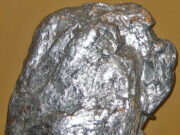
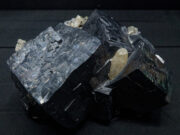
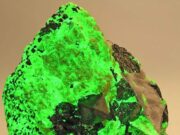
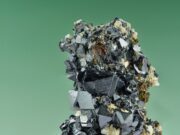

[…] Rocks: Mesoproterozoic quartz-mica-carbonate-carbonaceous schists (Teya and Sukhopit […]