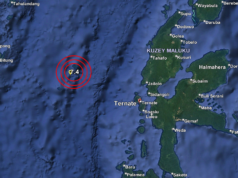

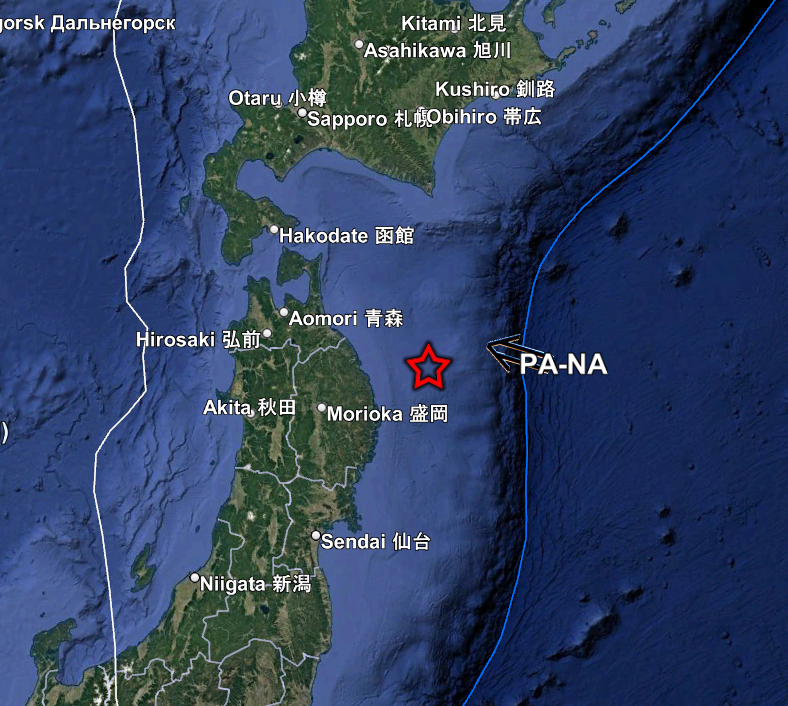
The Earth’s crust is highly dynamic, and the Pacific “Ring of Fire” serves as a constant reminder of the immense tectonic forces shaping our planet. On April 20, 2026, a powerful magnitude 7.5 earthquake struck off the northeastern coast of Japan, near the Sanriku coast (Iwate Prefecture).
For geologists and seismologists, this event is a textbook example of subduction zone dynamics. In this article, we will break down the geological mechanisms behind this specific earthquake, the resulting tsunami alerts, and the tectonic setting of the region.
The Seismic Event: What Happened?
According to the Japan Meteorological Agency (JMA), the mainshock occurred at 4:53 PM local time. The critical geological parameters of this event include:
- Magnitude: 7.5 (revised upwards from an initial 7.4).
- Depth (Focal Depth): Approximately 10 kilometers (6 miles). This is considered a very shallow earthquake, which explains the high intensity of surface shaking.
- Seismic Intensity: The temblor measured an “upper 5” on Japan’s 7-point seismic intensity scale (Shindo). At this level, unreinforced concrete block walls can collapse, and movement becomes highly difficult without support. The tremors were strong enough to sway high-rise buildings hundreds of kilometers away in Tokyo.
The Tectonic Trigger: Subduction Zone Mechanics
Japan is one of the most seismically active countries in the world, sitting at the complex intersection of four major tectonic plates: the Pacific Plate, the Philippine Sea Plate, the Eurasian Plate, and the North American Plate.
The April 2026 earthquake off the coast of Iwate occurred in a classic subduction zone. Here, the dense oceanic crust of the Pacific Plate is continuously diving (subducting) beneath the lighter continental crust of Japan at the Japan Trench.
- Friction and Stress: As the Pacific plate grinds downward, friction causes it to become “locked” with the overlying plate.
- Energy Accumulation: Over decades or centuries, massive strain energy builds up along this locked fault plane.
- Rupture: When the accumulated stress exceeds the frictional strength of the rocks, a sudden megathrust rupture occurs, releasing the energy in the form of seismic waves.
The Tsunami Mechanism: Megathrusts and Water Displacement
Following the magnitude 7.5 quake, authorities immediately issued a tsunami warning for coastal areas, including Iwate, Aomori, and Hokkaido, predicting waves up to 3 meters (10 feet).
Why do these specific earthquakes cause tsunamis? Because the April 20 quake was a shallow submarine megathrust event, the sudden snapping back of the overriding continental plate physically displaced the seafloor upwards. This vertical displacement acts like a giant paddle, lifting the entire column of ocean water above it. As gravity pulls the water back down to equilibrium, the energy radiates outward as a series of massive, high-velocity tsunami waves.
Initial reports confirmed waves of around 80 centimeters reaching Kuji port shortly after the rupture, demonstrating the immediate and dangerous nature of these coastal geological events.
Preparedness and Engineering Resilience
While we cannot stop the tectonic plates from moving, understanding the geology behind these events is crucial for survival. Because Japan experiences roughly one-fifth of the world’s earthquakes measuring magnitude 6.0 or greater, their investment in strict building codes, early warning systems, and deep-sea seismic sensors is unparalleled.
The suspension of the Tohoku Shinkansen bullet trains moments after the first P-waves were detected is a prime example of geology and engineering working together to prevent catastrophic losses.