
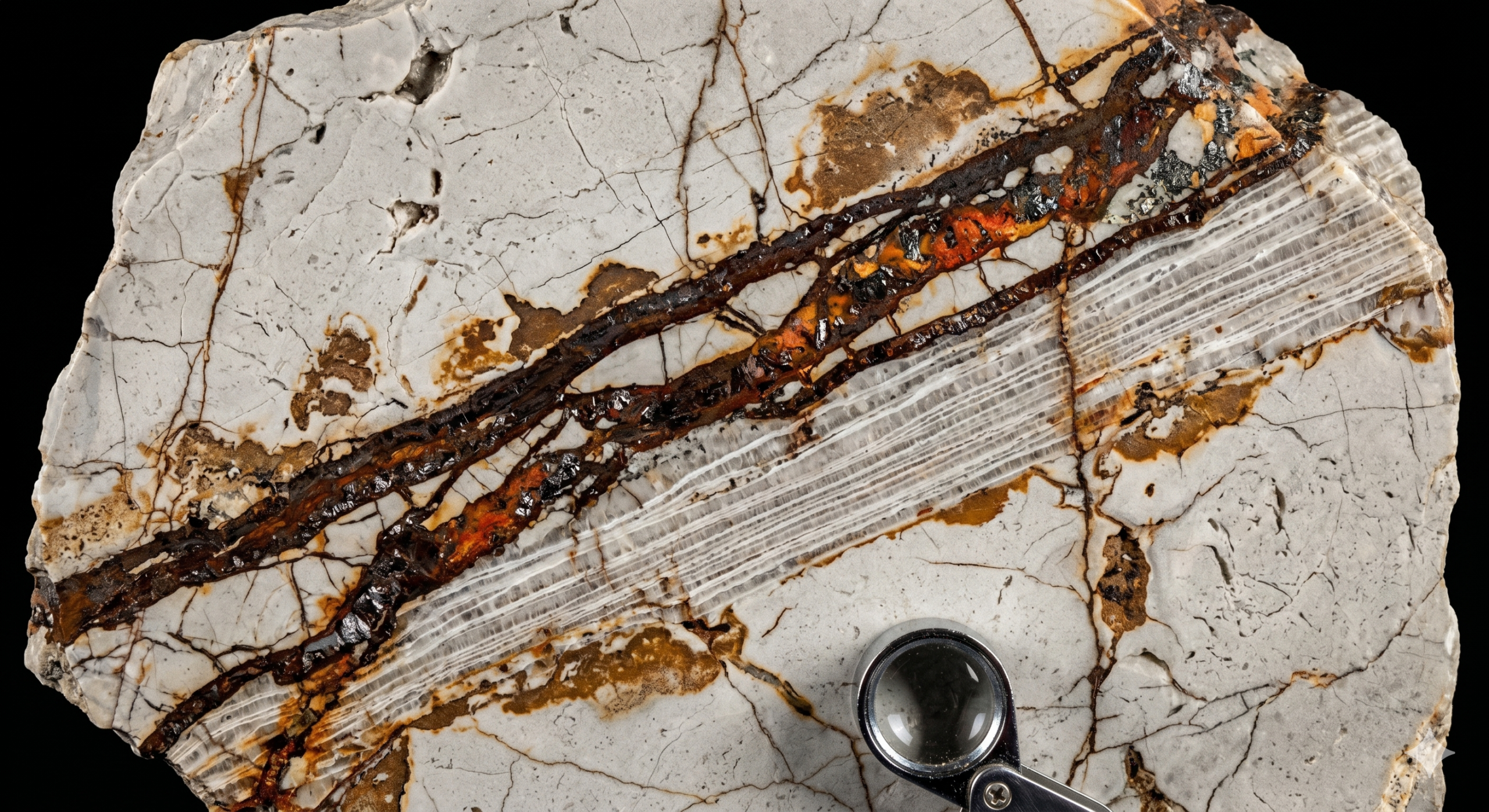
Introduction: The Giants of Base Metal Metallogeny

Many exploration models still incorrectly visualize SEDEX deposits as traditional “Black Smokers”. This part shatters that myth using recent fluid dynamics research.
Sedimentary Exhalative (SEDEX) deposits represent the world’s most prolific repository of zinc and lead, hosting more than 50% of the Earth’s known zinc reserves and substantial global resources of lead, silver, and barite.Unlike small, high-grade vein deposits, SEDEX systems are true geological behemoths. Tier-1 deposits such as Red Dog (Alaska, USA), Mount Isa and McArthur River / HYC (Queensland/Northern Territory, Australia), Century (Australia), and Sullivan (British Columbia, Canada) contain tens to hundreds of millions of tonnes of high-grade stratiform and stratabound ore.Formed within intracontinental and epicontinental sedimentary basins during periods of extensional crustal thinning, these systems represent the intersection of regional-scale basin hydrodynamics, syn-sedimentary structural traps, and elegant biochemical reduction mechanisms. This guide delivers a comprehensive breakdown of the genetic models, fluid pathways, geochemical vectoring footprints, and 3D modeling workflows essential for exploring and developing SEDEX systems.
1.Geodynamic Setting and Basin Architecture
From a metallogenic perspective, sedex deposits do not form in random sedimentary basins; rather, giant and supergiant sedex deposits are strictly restricted to specific geodynamic stages of continental rifting, failed rift arms (aulacogens), and post-rift thermal sag basins where prolonged crustal extension promotes deep basinal fluid circulation
Structural Hierarchy: The Growth Fault Engine
The primary architecture of a SEDEX basin is controlled by a multi-tiered extensional fault hierarchy:
- First-Order Basin-Bounding Faults: Regional, crustal-scale faults that penetrate deep into the crystalline basement. These serve as the primary plumbing system, tapping deeply circulating, metal-bearing basinal fluids.
- Second-Order Faults: Intra-basinal normal faults that subdivide the larger basin into discrete sub-basins.
- Third-Order Growth Faults (The Deposit Locality): Local syn-sedimentary normal faults that bound local grabens and half-grabens (depocenters). The intersections of these third-order structures with favorable permeable stratigraphy localize the hydrothermal venting or sub-seafloor replacement.
Sedimentary Facies and Stratigraphic Indicators
Field geologists can identify prospective SEDEX horizons by recognizing evidence of syn-sedimentary fault movement:
- Debris Flows and Sedimentary Breccias: Reworked sedimentary talus and mass-flow conglomerates directly adjacent to growth faults.
- Rapid Stratigraphic Thickening: Sharp thickness increases in shale and siltstone units across active faults into the depocenter.
- Restricted, Anoxic Sub-Basins: Deposition of organic-carbon-rich, pyritic black shales and carbonaceous cherts under euxinic (sulfidic and anoxic) bottom-water conditions.
2.Fluid Dynamics: The Brine Pool Paradox vs. Sub-Seafloor Replacement

Bridging the gap between the field and the software. This part tackles the severe structural and geometric challenges of taking drill hole data and building a robust 3D block model.
For decades, academic literature depicted all sedex deposits as simple deep-water analogues of volcanic-hosted black smokers with buoyant hydrothermal plumes venting into open seawater. Modern research into fluid physics, basinal brines, and stable isotopes has largely overturned this view, proving that the fluid dynamics forming sedex deposits are fundamentally governed by high-density, negatively buoyant brines that pool within seafloor depressions.
The Hyper-Saline Brine Pool Model
Unlike the hot (300°C to 400°C), buoyant, low-salinity fluids of Volcanogenic Massive Sulfide (VMS) systems, SEDEX fluids are:
- Moderately warm: Typically 100°C to 200°C.
- Hyper-saline: Possessing 15 to 25 wt.% NaCl equivalent, derived from the evaporation of seawater and dissolution of subsurface evaporite beds.
- Slightly acidic and reduced: Capable of transporting vast quantities of zinc and lead as chloride complexes (such as ZnCl4²⁻ and PbCl3⁻).
Because of this extreme salinity, the hydrothermal fluid is significantly denser than ambient seawater. Upon discharging from seafloor vents, the fluid cannot rise as a buoyant plume. Instead, it flows downhill along the sea bottom, filling local bathymetric depressions to form stagnant, stratified “brine pools.” Within these anoxic brine pools, metals precipitate as finely laminated sulfides undisturbed by ocean currents.
The Sub-Seafloor Replacement Model
Detailed petrographic studies on world-class deposits like Red Dog and Century demonstrate that substantial mineralization did not exhale into open water. Instead, the metalliferous brines infiltrated unconsolidated, highly permeable, carbonaceous mudstones and semi-lithified carbonate siltstones meters to tens of meters beneath the active seafloor.
The brines selectively dissolved reactive carbonate grains and precipitated sulfides within the pore space, creating replacement-style stratabound massive sulfide lenses that mimic true exhalative bedded ores.
3. Chemical Traps: Bacterial vs. Thermochemical Sulfate Reduction
A central principle of base metal geochemistry is that hydrothermal brines transporting tens to hundreds of parts-per-million (ppm) of zinc and lead cannot carry abundant reduced sulfur (H2S); if they did, the metals would precipitate inside the deep conduit before reaching the target horizon.
Therefore, SEDEX deposits require an external sulfur source to trigger ore precipitation.
a. Bacterial Sulfate Reduction (BSR)
- Temperature Range: Low temperatures (< 80°C to 100°C).
- Mechanism: In shallow sub-seafloor sediments and anoxic bottom waters, anaerobic sulfate-reducing bacteria consume sedimentary organic matter to reduce ambient seawater sulfate (SO4²⁻) into hydrogen sulfide (H2S):
2 CH2O + SO4²⁻ → 2 HCO3⁻ + H2S - Isotopic Signature: Produces strongly negative sulfur isotope values (delta-34S < 0 per mil), reflecting high biological fractionation.
b. Thermochemical Sulfate Reduction (TSR)
- Temperature Range: Higher temperatures (> 100°C to 140°C).
- Mechanism: As hydrothermal brines exceed the thermal tolerance of living microbes, dissolved sulfate reacts abiotically with organic hydrocarbons (kerogen and petroleum) in the host shale, generating copious H2S directly within the fluid-rock reaction zone.
- Isotopic Signature: Yields heavier, positive sulfur isotope values (delta-34S typically +10 to +30 per mil), closely matching the isotopic signature of evaporite-derived basinal sulfate.
4. Ore Facies Architecture: From Feeder Pipe to Distal Apron
A fully preserved, unmetamorphosed SEDEX deposit exhibits a distinct, predictable lateral and vertical facies zoning away from the syn-sedimentary feeder fault:
[Feeder Fault / Vent-Proximal] --------> [Bedded Ore Facies] --------> [Distal Exhalite]
- Massive/Breccia Sulfides               - Fine Laminated Sphalerite    - Bedded Barite
- Siderite / Ankerite / Quartz           - Galena + Pyrite Bands        - Manganiferous Ankerite
- Minor Chalcopyrite + Pyrrhotite        - Carbonaceous Black Shale     - Chert Exhalites
a. Vent-Proximal (Feeder) Facies
Located directly adjacent to the growth fault. Consists of discordant, epigenetic veins, cross-cutting stringers, and hydraulic breccias.
- Mineralogy: Coarse-grained pyrite, pyrrhotite, galena, iron-rich (dark) sphalerite, and minor chalcopyrite within an intense siderite-ankerite-quartz alteration pipe (e.g., the Sullivan tourmalinite and footwall conglomerate pipe).
b. Bedded / Laminated Ore Facies (Main Economic Body)
Extends hundreds of meters laterally away from the feeder zone within the stratified sub-basin.
- Mineralogy: Exquisitely laminated, millimeter- to centimeter-scale planar bands of fine-grained, low-iron (pale to honey-yellow) sphalerite, galena, and framboidal pyrite intercalated with organic-rich mudstones. Grades in this facies often exceed 10–25% combined Zn+Pb.
3. Distal Exhalative Facies
Forms a regional halo extending kilometers beyond the sulfide limits.
- Mineralogy: Massive bedded barite (BaSO4) horizons, exhalative cherts, and manganese-iron-rich carbonate beds.
5. Cryptic Alteration Halos and Lithogeochemical Vectoring
Because economic sedex deposits are typically thin, laterally extensive, and frequently blind at the surface, discovering new sedex deposits in mature or frontier exploration terranes requires tracking invisible, broad lithogeochemical footprints and trace-element pathfinders rather than relying solely on visual alteration.
The “Barren” Pyrite Halo and Trace Pathfinder Elements
Massive pyritic shale envelopes extending 1 to 5 kilometers around a deposit are often completely barren of economic zinc and lead. However, laser ablation (LA-ICP-MS) and multi-element geochemistry reveal that these pyrites carry diagnostic trace-element anomalies:
- Thallium (Tl) and Mercury (Hg): Highly volatile and mobile; both elements substitute into the crystal lattice of distal pyrite. High Tl/Pb and Tl/Zn ratios provide an unequivocal vector toward the central vent.
- Antimony (Sb) and Arsenic (As): Form prominent enrichment zones directly above and lateral to the ore horizon.
Manganese Carbonate Footprint
During hydrothermal venting, exhalative manganese (Mn) and barium (Ba) disperse widely into oxygenated basin waters before settling out. Carbonate rocks and cements surrounding SEDEX systems incorporate this manganese:
- Mapping elevated MnO/FeO ratios and manganiferous ankerite-siderite alteration in regional drill cores can define prospective exploration vectors spanning 10 to 15 kilometers away from the deposit center.
6. Structural Overprints and 3D Modeling Challenges
For resource geologists utilizing software packages such as Leapfrog Geo or Datamine, SEDEX deposits present severe mathematical and geometric modeling hurdles:
- Extreme Geometric Anisotropy: SEDEX lenses have high lateral continuity along bedding (often spanning > 1–2 km) but very narrow stratigraphic thicknesses (from < 1 meter up to tens of meters). Forcing traditional wireframing can easily over-smooth boundaries and cause catastrophic internal dilution.
- Modeling Strategy: Utilize stratigraphic deposit modeling tools and assign strict structural trend surfaces aligned with regional bedding planes.
- Inversion Tectonics and Post-Depositional Folding: Almost all major SEDEX deposits have undergone later compressional orogenesis (e.g., Mount Isa, Sullivan). Syn-sedimentary normal faults are frequently reactivated as reverse faults, creating complex drag folds and fault-duplications.
- Modeling Strategy: Structural domaining is non-negotiable. Define fault blocks as individual kinematic domains before interpolating grade boundaries.
- Internal Remobilization: Soft galena and sphalerite undergo significant plastic deformation and solid-state remobilization during metamorphism, flowing into fold hinges and dilatant fault jogs to create localized, ultra-high-grade “remobilized pods.”
7. Key Exploration Takeaways for Geologists
- Map the Basin, Not Just the Outcrop: Regional exploration targeting for world-class sedex deposits must focus on 3rd-order sub-basins controlled by syn-sedimentary growth faults, as these structural depocenters govern the accumulation and preservation of Tier-1 sedex deposits.
- Track the Barite Footprint: Stratiform barite units on the surface are frequently the distal lateral exhalite of a giant zinc-lead system hidden deeper or up-dip along the structure.
- Vector with Pyrite Geochemistry: Do not discard barren-looking pyritic shales. Analyze pyrite for Thallium (Tl), Mercury (Hg), and Antimony (Sb) to vector into the concealed hydrothermal conduit.

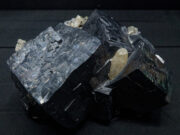
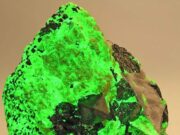
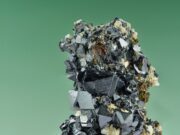


[…] SEDEX Deposits […]
[…] SEDEX Deposits […]
[…] SEDEX Deposits […]