
Granite: The Ultimate Geological Guide to Earth’s Toughest Rock
When you stand on solid ground almost anywhere on a continent, there is a very high probability that miles beneath your feet lies a massive foundation of granite. Known for its extreme durability and striking crystalline appearance, granite is the most abundant intrusive igneous rock in Earth’s continental crust.
Whether you are an aspiring geologist, a student, or simply someone fascinated by the natural world, understanding it is essential to understanding the history and structure of our planet.
What is Granite? (Mineral Composition)
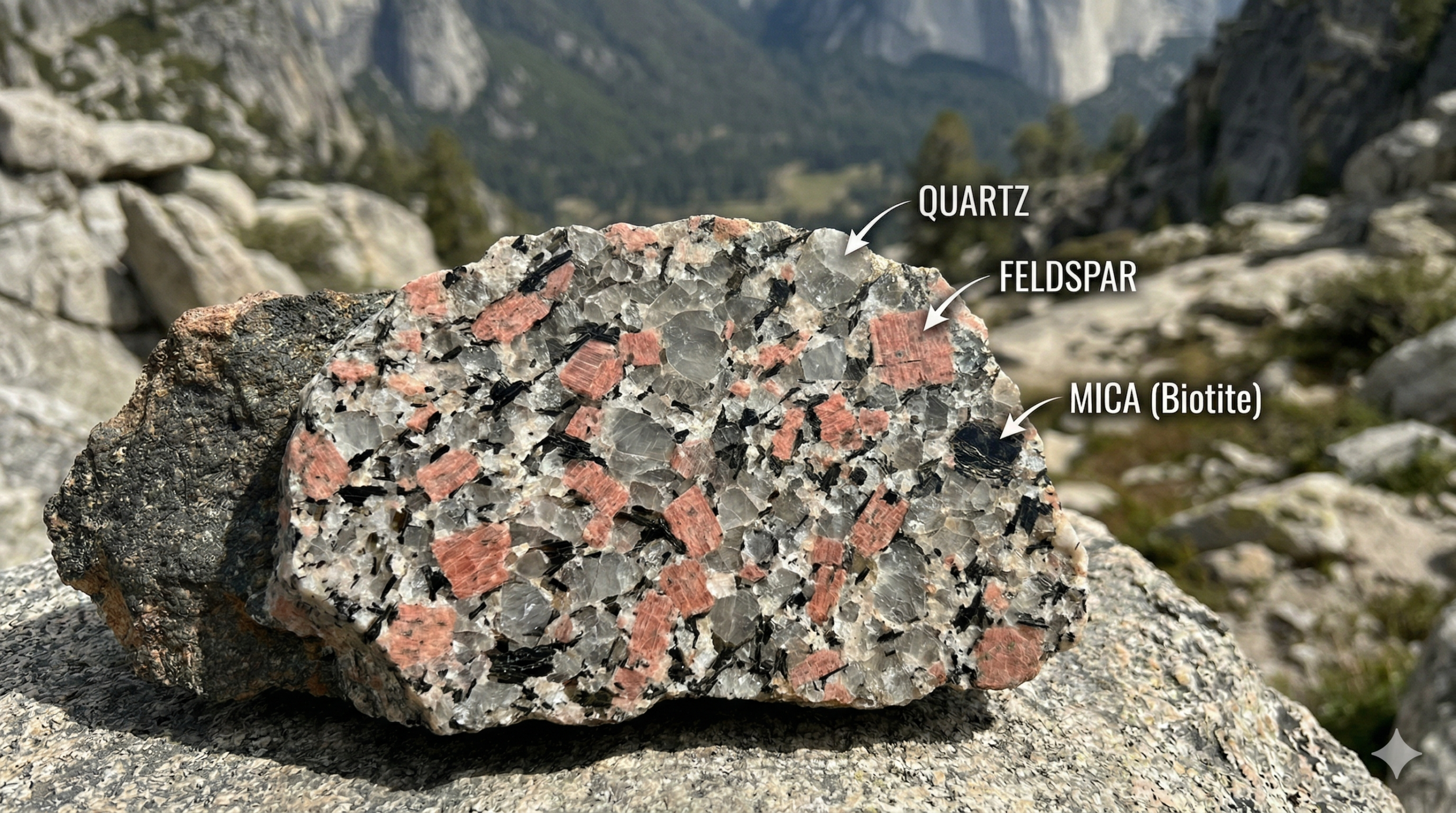
Granite is an intrusive igneous rock with a granular and phaneritic (visible crystals) texture. By geological definition, a rock can only be classified as true granite if it contains a specific ratio of minerals. The classic “granite recipe” consists of three main ingredients:
- Quartz (20% to 60%): This gives granite its hardness and glassy, transparent to milky-white appearance.
- Feldspar (10% to 65%): The dominant mineral. Potassium feldspar (orthoclase) gives granite its famous pink or reddish hues, while plagioclase feldspar contributes white or gray colors.
- Mica (Biotite or Muscovite) and Amphibole: These are the dark, flaky, or needle-like minerals that give granite its characteristic “salt and pepper” speckled look.
How Does Granite Form? (The Magmatic Process)

Unlike volcanic rocks (like basalt or pumice) that erupt onto the surface and cool rapidly, granite forms deep underground in a slow, highly pressurized environment.
- Magma Generation: Granite originates from the melting of silica-rich continental crust, often at convergent plate boundaries where tectonic plates collide and thicken.
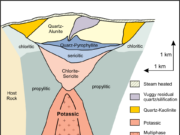
- Slow Cooling (Plutonic Environment): The molten magma gets trapped in massive underground chambers called plutons or batholiths, often 10 to 50 kilometers beneath the surface.
- Crystallization: Because it is insulated by the surrounding rock, the magma cools incredibly slowly—sometimes taking millions of years. This slow cooling allows the atoms to arrange themselves into large, tightly interlocking crystals (a phaneritic texture) that are easily visible to the naked eye.
- Uplift and Erosion: We only see granite at the surface today because tectonic forces have uplifted these deep rock masses over millions of years, while wind, water, and ice have eroded away the miles of overlying rock.
Geological Characteristics and Identification
Identifying granite in the field is relatively straightforward due to its distinct physical properties:
- Texture: Coarse-grained (macroscopic crystals).
- Hardness: Because it is rich in quartz and feldspar, granite ranks between 6 and 7 on the Mohs hardness scale. It is hard enough to scratch glass and resist weathering exceptionally well.
- Color: Highly variable depending on the chemistry of the original magma. It ranges from light gray and stark white to deep reds and vibrant pinks.
Global Distribution: Where is Granite Found?
Granite forms the core of the continents. It is never found in the oceanic crust (which is primarily basalt). Major geological features made of granite include:
- Continental Shields: The Canadian Shield, the Baltic Shield, and the African Shield expose massive expanses of ancient Precambrian granite.
- Mountain Cores: The roots of many major mountain ranges, including the Himalayas, the Alps, and the Sierra Nevada in the United States, are composed of colossal granitic batholiths.
Economic and Practical Uses
Due to its incredible compressive strength, resistance to weathering, and aesthetic appeal, granite has been utilized by humans for millennia.
- Construction & Architecture: Used for building facades, structural foundations, and paving.
- Dimension Stone: Cut and polished for kitchen countertops, monuments, and gravestones.
- Aggregates: Crushed granite is highly valued as a base material in railway tracks and highway construction.
Granite is not just a commercial material; it is the geological backbone of our continents, recording millions of years of Earth’s dynamic thermal history within its interlocking crystals.
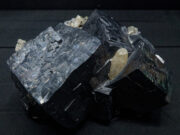

[…] Granite: The classic example, featuring visible crystals of quartz, potassium feldspar, and biotite mica. […]
[…] enough time to organize into a geometric, ordered crystal structure. This results in rocks like granite or […]