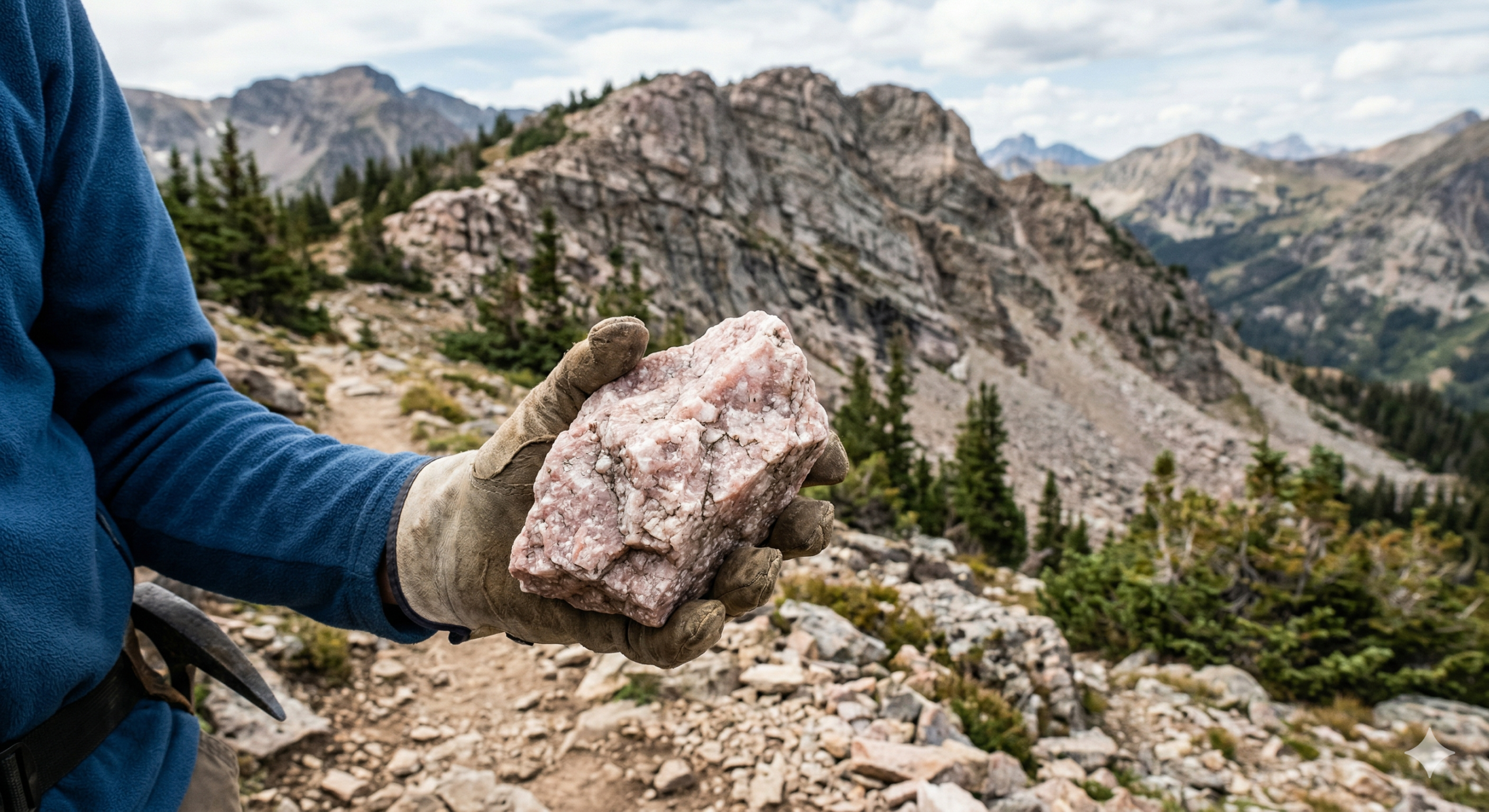
The Unbreakable Metamorphic Armor of the Earth
What is Quartzite?
Quartzite is a hard, non-foliated metamorphic rock which was originally pure (or nearly pure) quartz sandstone. Through the relentless forces of metamorphism, the individual sand grains and the silica cement binding them together are fused into an incredibly dense, interlocking network of quartz crystals. It is widely considered one of the most physically durable and chemically resistant rocks on the Earth’s surface.
The Transformation: From Beach Sand to Solid Armor
The journey of quartzite begins in a sedimentary environment, typically a beach, river delta, or dune field, where quartz-rich sand accumulates and lithifies into sandstone (the protolith).
When this sandstone is subjected to the immense heat and pressure of tectonic collisions (regional metamorphism) or the baked margins of a magma intrusion (contact metamorphism), a profound structural change occurs: Recrystallization: The original quartz sand grains and the silica cement holding them together begin to melt slightly and recrystallize. The boundaries between the individual grains disappear entirely, forming a tight, fused, granoblastic mosaic.

The Formation of Quartzite: A Story of Intense Recrystallization
- Extreme Heat & Pressure: The rock faces intense heat (ranging from ~600-800°C) from magma intrusions or deep burial, combined with massive tectonic pressure (~2-8 kbar).
- The Recrystallization Process: Under these extreme conditions, the original individual quartz grains and the silica cement that binds them begin to fuse together.
- Microstructural Shift: The rock undergoes key transformations: it loses all its pore spaces (porosity loss) and its texture changes from granular to a dense, fully interlocked crystalline structure known as a granoblastic texture.
- The Fracture Test: This complete fusion makes quartzite incredibly durable (Mohs hardness of ~7). As a result, while sandstone breaks around its individual grains, true metamorphic quartzite is so tightly bonded that it fractures cleanly through the quartz grains themselves
Field Identification: The Ultimate Hardness Test
For geologists mapping in the field, distinguishing quartzite from similar-looking rocks like marble or even its parent rock, sandstone, relies on a few critical physical tests:
- The Hardness Test: This is the most defining characteristic. Since it is composed entirely of interlocking quartz crystals, quartzite has a Mohs hardness of 7. It will easily scratch glass, and an ordinary steel knife or rock hammer cannot scratch it. (In contrast, marble has a hardness of 3 and is easily scratched by steel).
- The Fracture Pattern: When sandstone breaks, it typically fractures around the individual sand grains, leaving a rough, sandpaper-like surface. When quartzite breaks, the rock is so thoroughly fused that the fracture passes right through the quartz grains themselves. This results in a much smoother, sometimes glassy or conchoidal (shell-like) fracture surface.
- The Acid Test: Unlike marble, which vigorously fizzes under dilute hydrochloric acid (HCl), pure quartzite shows absolutely no reaction to acid.
Color Variations and Textures
Pure quartzite is typically white to gray. However, just like marble, impurities present in the original sandstone can create stunning color variations:
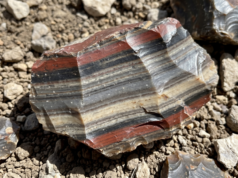
- Pink, Red, or Purple: Indicates the presence of iron oxide (hematite) impurities.
- Yellow or Orange: Usually points to the presence of other iron minerals like limonite.
- Green: Rare, but can occur if minerals like fuchsite (a chromium-rich mica) are present.
Despite these colors, the texture remains consistently granular and non-foliated, meaning it lacks the banded or layered appearance of rocks like gneiss or schist.
Geologic and Architectural Significance
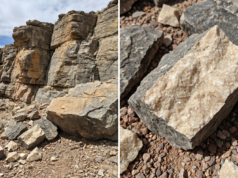
Because of its extreme resistance to chemical weathering and physical erosion, quartzite often forms the jagged crests of mountain ranges and resilient ridges in the landscape, long after surrounding rocks have weathered away.
Commercially, its immense durability makes it highly sought after. While it is extremely difficult to quarry and cut (often rapidly wearing down diamond blades), crushed quartzite is heavily used as railway ballast and in highway construction. In high-end architecture, dimension stone quartzite is prized for countertops and decorative wall coverings due to its resistance to scratching and chemical etching.